
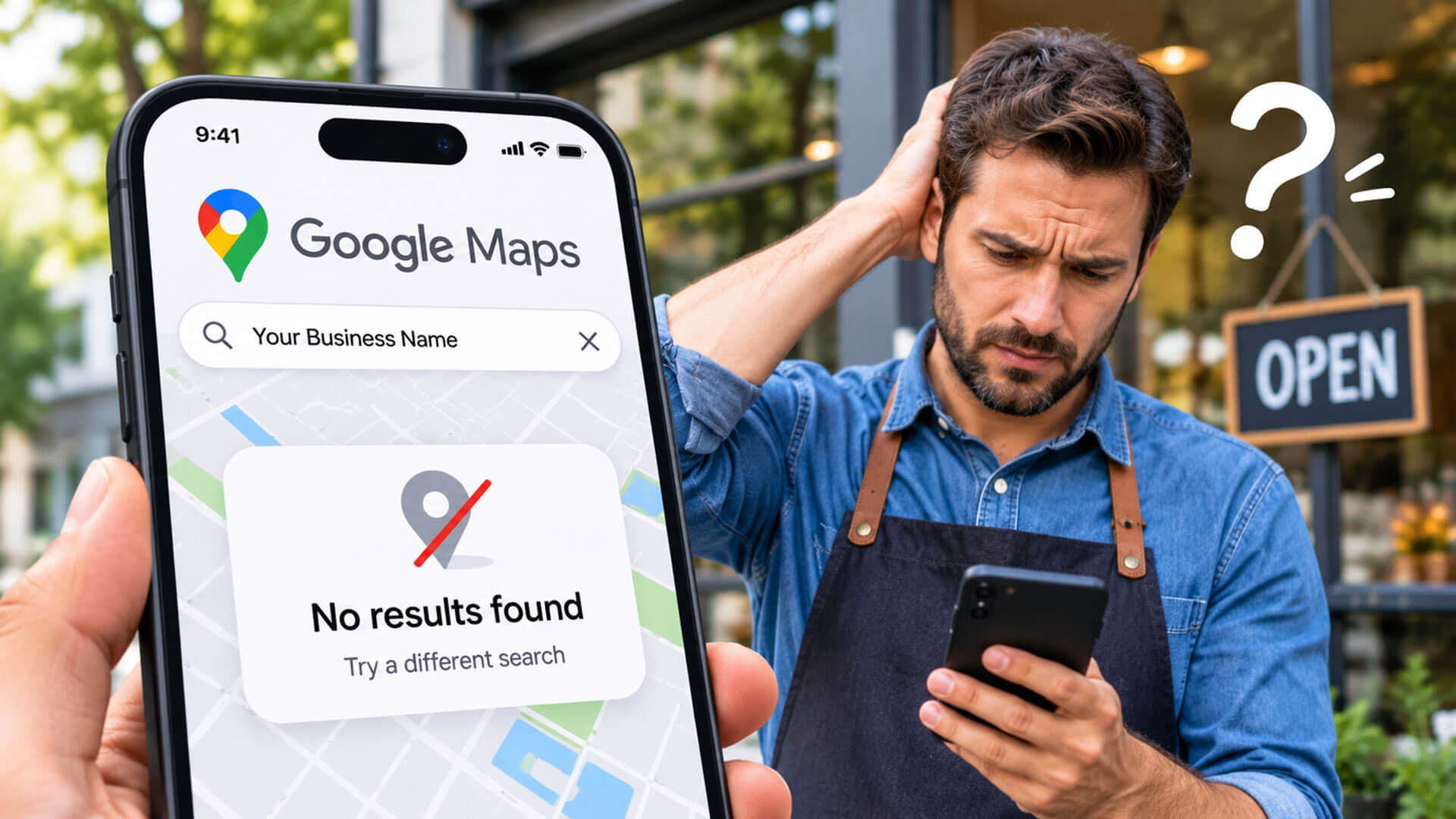
When potential customers search for products or services in their area, Google Maps is often one of the first places they look. Whether someone needs a plumber, an HVAC technician, an electrician, or another local service provider, they typically want a business that is nearby, reputable, and available to help. If your small business isn’t appearing in Google Maps results, you could be missing valuable opportunities to attract new customers.
Not showing up on Google Maps doesn’t necessarily mean your business is doing something wrong. Several factors can affect your local visibility, including an incomplete Google Business Profile, inconsistent business information, limited online authority, and insufficient local SEO optimization.
The good news is that these issues can be addressed with the right strategy. Understanding how Google Maps rankings work and implementing proven optimization techniques can help your business improve its local search presence, attract qualified leads, and compete more effectively in your service area.
1. Your Google Business Profile Is Incomplete or Unoptimized
One of the most common reasons a business struggles to appear on Google Maps is an incomplete or poorly optimized Google Business Profile (GBP).
Your Google Business Profile provides Google with essential information about your business, including its name, address, phone number, website, operating hours, services, and business category. When important information is missing or inaccurate, Google may have difficulty understanding your business and determining which searches are relevant to it.
How to fix it:
Start by claiming and verifying your Google Business Profile. Then, review every available section to ensure your information is accurate and complete.
Focus on the following:
- Business Information: Use your legitimate business name, accurate phone number, website, and operating hours.
- Primary and Secondary Categories: Select the most relevant primary category and appropriate secondary categories that accurately describe your services.
- Business Description: Write a clear description explaining what your business does, which customers it serves, and what makes its services valuable.
- Services: Add the specific products or services your business offers.
- Photos and Videos: Upload genuine images of your team, completed projects, storefront, equipment, or work environment.
- Business Attributes: Include relevant attributes that help customers understand what your business offers.
A complete profile helps Google understand your business while giving potential customers the information they need to make informed decisions.
2. Your Business Information Is Inconsistent Across the Web
Google looks at information from multiple sources to better understand and validate local businesses. If your business name, address, and phone number (NAP) differ across your website, business directories, social media profiles, and other online listings, it can create confusion.
For example, your website might list one phone number while an online directory displays an outdated number. Your business address might also appear differently across multiple platforms.
Although minor formatting differences do not automatically prevent rankings, inaccurate or conflicting information can undermine customer trust and make business information harder to verify.
How to fix it:
Conduct a local citation audit to identify inconsistencies across your online presence.
Check the following:
- Google Business Profile
- Website contact page and footer
- Facebook and other social media profiles
- Yelp and relevant business directories
- Industry-specific directories
- Local business associations
Make sure your business name, address, and phone number are accurate wherever they appear. Update outdated listings and remove duplicate profiles when appropriate.
Consistent business information supports a stronger local SEO foundation and helps customers contact your business without unnecessary confusion.
3. Your Website Isn’t Optimized for Local Search
Your Google Business Profile is important, but your website also plays a significant role in establishing local relevance and credibility.
If your website doesn’t clearly communicate your services, service locations, and business expertise, Google may have difficulty connecting your business to relevant local searches.
Your website should also provide a good mobile experience, load quickly, and make it easy for visitors to request a quote or contact your team. You can use Google Search Console to monitor your website’s search performance, identify indexing issues, and understand which search queries bring visitors to your website.
How to fix it:
Build a website structure that supports your local SEO strategy.
Start with these improvements:
- Create Dedicated Service Pages: Develop individual pages for important services instead of placing everything on one general page.
- Develop Location-Specific Pages: If your business genuinely serves multiple cities or communities, create useful pages that address the needs of customers in those areas.
- Optimize Page Titles and Meta Descriptions: Include relevant service and location keywords naturally.
- Use Descriptive Headings: Organize content with clear H1, H2, and H3 headings that explain each page’s topic.
- Add Internal Links: Connect related service pages, location pages, and supporting blog articles.
- Include Contact Information: Make your business name, address, phone number, and service area easy to find.
Your website should also provide a good mobile experience, load quickly, and make it easy for visitors to request a quote or contact your team.
4. Your Business Has Few Reviews or Limited Customer Engagement
Online reviews influence how potential customers evaluate local businesses. A profile with genuine, positive customer feedback can establish credibility and encourage people to choose your company over competitors.
Reviews also contribute to local prominence, one of the factors Google considers when determining local search rankings.
However, simply having more reviews does not guarantee better placement on Google Maps. Review quality, quantity, and overall reputation can all contribute to your business’s competitive position.
How to fix it:
Develop a consistent process for requesting feedback from satisfied customers.
Consider these practices:
- Ask customers for honest reviews after completing a service.
- Send a direct Google review link through email or text.
- Respond professionally to positive and negative reviews.
- Address customer concerns instead of ignoring negative feedback.
- Never purchase reviews or offer incentives in exchange for positive ratings.
Responding to reviews demonstrates that your business values customer experiences. It also gives potential customers additional insight into your professionalism and commitment to service quality.
5. Your Business Has Limited Local Authority and Online Visibility
Google considers prominence when determining which businesses appear in local search results. Prominence relates to how well-known and established a business appears to be, based on factors such as links, reviews, and information available across the web.
If your competitors have stronger websites, more authoritative backlinks, established local citations, and greater brand recognition, they may have a competitive advantage.
Build your business’s online authority through sustainable local SEO practices. Tools such as Ahrefs can help you analyze competitor backlink profiles, evaluate referring domains, and identify potential link-building opportunities.
How to fix it:
Build your business’s online authority through sustainable local SEO practices.
Some effective strategies include:
- Earn backlinks from reputable local organizations and relevant industry websites.
- Publish helpful articles that address common customer questions.
- Participate in local sponsorships, community events, and business partnerships.
- Maintain accurate listings in relevant industry directories.
- Develop useful content that demonstrates your knowledge and experience.
- Strengthen your website’s internal linking structure.
Avoid purchasing low-quality backlinks or participating in manipulative link-building schemes. Focus on earning relevant links and building a reputation that reflects your actual business expertise.
6. Your Business Is Targeting the Wrong Keywords
Another reason your business might not appear in relevant Google Maps searches is that your local SEO strategy doesn’t align with how customers search.
Conduct keyword research to identify the services and search terms your potential customers actually use. Platforms such as Semrush provide keyword research and competitor analysis tools that can help uncover relevant search terms, evaluate keyword opportunities, and identify gaps in your local SEO strategy.
For example, a company offering residential plumbing services might optimize its website primarily for general terms such as “home services” instead of specific searches like “water heater repair” or “emergency plumbing.”
Without a clear keyword strategy, your website may struggle to establish relevance for the services that generate qualified leads.
How to fix it:
Conduct keyword research to identify the services and search terms your potential customers actually use.
Organize your keywords into groups based on search intent:
- Primary Service Keywords: Plumbing repair, HVAC installation, electrical services.
- Location-Based Keywords: Plumber in Denver, HVAC company in Casper, electrician in Sheridan.
- Service-Specific Keywords: Drain cleaning, AC replacement, electrical panel upgrades.
- Informational Keywords: Why is my water heater leaking? How often should an HVAC system be serviced?
Use these keywords naturally in relevant website content, page titles, headings, and service descriptions.
Remember that adding city names repeatedly or stuffing keywords into your Google Business Profile name will not create sustainable rankings. Your content should be written for customers first while clearly communicating your business’s relevance.
7. Your Google Business Profile Has Verification or Eligibility Issues
Sometimes, businesses don’t appear on Google Maps because their profiles have not been verified, have been suspended, or do not meet Google’s Business Profile eligibility requirements.
For example, a business operating entirely online without in-person customer contact generally does not qualify for a Google Business Profile. Service-area businesses can qualify if they meet Google’s requirements and serve customers at their locations.
How to fix it:
Check your profile’s verification and account status. If Google requests additional verification, follow the instructions provided through your Business Profile account.
If your profile has been suspended, review Google’s guidelines and identify the reason before submitting a reinstatement request.
Make sure your business follows these practices:
- Use an accurate business name without additional keywords.
- Provide a legitimate business address for verification, even if it is hidden from customers as a service-area business.
- Set service areas accurately.
- Avoid creating multiple profiles for the same business location.
- Follow Google’s eligibility and representation guidelines.
Correcting eligibility and verification issues should come before investing heavily in other local SEO activities.
How the Best Local SEO Strategy Improves Google Maps Visibility
Fixing individual Google Business Profile issues is a good starting point, but sustainable local visibility requires a coordinated strategy.
The best local SEO approach combines Google Business Profile optimization, website improvements, local content, citation management, reputation building, and authority development.
Working with a top local SEO expert can help identify technical issues, uncover ranking opportunities, and prioritize improvements based on your business goals.
When evaluating the best local search engine optimization services, look for a provider that offers:
- Comprehensive SEO Audits: Identifying technical, on-page, off-page, and local SEO issues.
- Google Business Profile Management: Improving profile accuracy, relevance, and customer engagement.
- Local Keyword Research: Identifying valuable service and location-based search opportunities.
- Website Optimization: Improving page structure, content quality, mobile usability, and technical performance.
- Citation Management: Maintaining accurate business information across relevant directories.
- Link Building: Developing relevant, trustworthy backlinks that support website authority.
- Performance Tracking: Monitoring rankings, website traffic, calls, leads, and other meaningful business metrics.
The best local SEO company in the nation isn’t necessarily the one promising overnight rankings. It is the provider that understands your business, communicates its strategy clearly, and focuses on measurable improvements rather than unrealistic guarantees.
When comparing local search marketing companies, prioritize transparency, relevant experience, and a clear understanding of how their work contributes to your business growth.
Why Choose Profit Pandas for Local SEO?
At Profit Pandas, we understand that local visibility is about more than appearing in search results. It is about helping businesses connect with potential customers who are actively looking for their services.
Our approach combines technical SEO, on-page optimization, local search strategies, content development, and Google Business Profile optimization to help businesses strengthen their online presence.
We focus on identifying the issues that may be limiting your visibility, developing practical optimization strategies, and tracking progress through meaningful performance indicators.
Whether your business needs a comprehensive SEO audit, stronger local landing pages, improved Google Business Profile optimization, or a more effective local search strategy, Profit Pandas can help you build a stronger foundation for long-term growth.
Stop losing potential customers to competitors who are easier to find online. Visit Profit Pandas to explore our digital marketing services and discover how a strategic local SEO campaign can help your business reach more customers.
Frequently Asked Questions About Google Maps and Local SEO
1. Why is my business not showing up on Google Maps?
Your business may not appear because your Google Business Profile is unverified, incomplete, suspended, or ineligible. Other contributing factors include inconsistent business information, limited local authority, weak website optimization, and strong competition. Start by checking your profile status and correcting any missing or inaccurate information.
2. How long does it take to rank on Google Maps?
There is no guaranteed timeframe for Google Maps rankings. Results depend on your business’s location, competition, profile quality, website authority, reviews, and overall local SEO performance. Some improvements may produce noticeable changes within weeks, while more competitive markets may require several months of consistent optimization.
3. Does my website affect my Google Maps ranking?
Yes. Your website helps Google understand your business, services, and geographic relevance. Relevant content, strong internal linking, accurate business information, and a technically sound website can support your local search visibility. However, website optimization alone does not guarantee Google Maps rankings.
4. Do Google reviews help improve local SEO rankings?
Yes. Reviews contribute to local prominence and influence customer trust. Google considers review quantity and positive ratings among its local ranking factors. Encouraging genuine customer feedback and responding professionally can strengthen your online reputation.
5. Can a service-area business rank on Google Maps without showing its address?
Yes. Eligible service-area businesses can create a Google Business Profile and hide their residential or business address from public view. However, they must provide a legitimate address for verification and meet Google’s eligibility requirements.
6. Should I hire a local SEO company to improve my Google Maps rankings?
Hiring a local SEO company can help if you lack the time, expertise, or resources to manage your local search strategy. An experienced provider can audit your website and Google Business Profile, identify ranking opportunities, improve local relevance, and monitor performance. Choose a company that uses transparent methods and avoids guaranteed-ranking promises.
7. What is the most important factor for ranking on Google Maps?
There isn’t one single factor that guarantees a top position. Google primarily considers relevance, distance, and prominence when determining local results. Businesses should focus on accurate profile information, relevant services, strong website content, genuine reviews, and a trustworthy online presence.
8. How much do local SEO services cost?
Local SEO pricing varies depending on your industry, competition, service locations, website condition, and campaign requirements. A single-location business may need a different level of support than a company targeting multiple cities. Request a clear proposal outlining the services, deliverables, reporting, and expected campaign priorities before making a decision.
About the Author
Profit Pandas Editorial Team
The Profit Pandas Editorial Team creates informative, research-driven content covering SEO, digital marketing, local search optimization, paid advertising, and AI-powered search strategies. By combining industry knowledge with practical insights, the team helps business owners and marketing professionals strengthen their online presence, attract qualified leads, make smarter marketing decisions, and drive long-term business growth.