
The phrase people search for most on any day is not always the one with the most monthly volume. For local contractors, the better goal is to find real demand, real intent, and real ranking chances. That is where home service SEO helps. Use keyword analysis, Google Trends, and local intent to find terms that can lead to booked jobs.
What is the most googled word today?
If you mean the highest-volume recurring Google query, keyword databases often show youtube near the top. Big brand terms like Amazon, Facebook, Google, Gmail, and ChatGPT also show up among the most searched terms. (semrush.com)
If you mean what is hot right now, the answer changes all day. Google Trends’ Trending Now data is built for that and updates often. It shows how today’s top searches can move from brands to news, sports, politics, and local events. (support.google.com)
That split matters. Most searched usually means large, steady demand. Trending searches means a sudden rise in interest. Popular keywords are not always useful keywords. Local trades should learn from both, but they should not build a plan around giant generic terms.
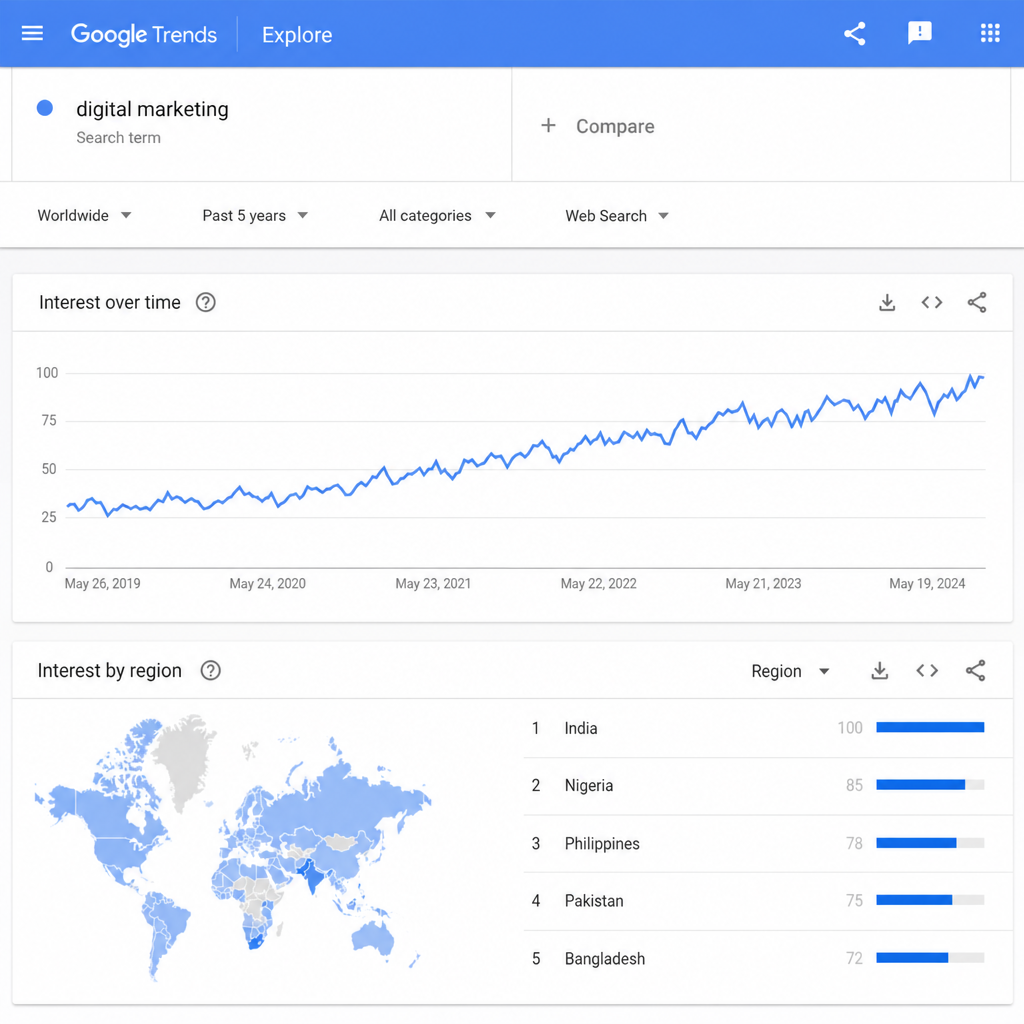
Big keywords are popular, but they are rarely practical
Most top Google terms are brand-based. People search YouTube or Gmail to reach a site, not to hire help.
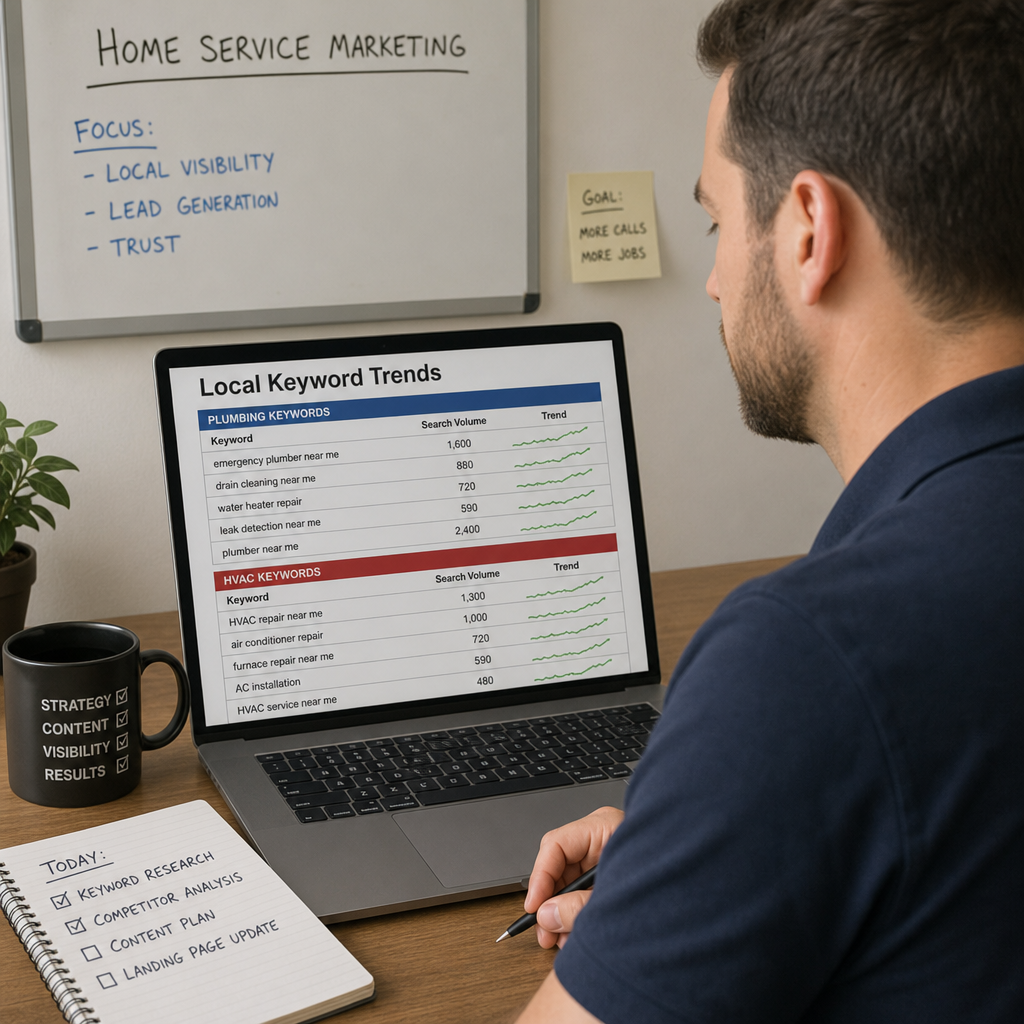
That is why keyword analysis must split curiosity from action. A keyword can rank high and still do nothing for lead flow. A smaller term like emergency plumber near me, AC repair in [city], or water heater replacement cost may bring less traffic, but it is closer to a sale.
For home services SEO, the goal is the overlap of volume, intent, local fit, and ranking ease.
A simple way to sort keywords is to ask:
- Is the search local? Phrases with near me, city names, neighborhoods, and service areas usually matter more for contractors.
- Is the search urgent? Emergency, same day, repair, and open now often signal immediate need.
- Is the search specific? Tankless water heater installation is usually more useful than water heater.
- Can your site really compete? A national keyword may be too hard, while a city-service phrase may be reachable.
- Does the page match the intent? A service page should target buyers; a blog post should answer research questions.
Search intent turns keyword data into strategy
Search intent is the reason behind a query. Semrush groups keyword intent into types such as info, brand, commercial, and transactional, and its Keyword Overview reports can show intent, volume, trends, keyword difficulty, CPC, and ranking pages for a searched term. (semrush.com)
For a home service business, those types shape the content plan:
- Info searches include questions like why is my AC blowing warm air or how long does a sump pump last. These are ideal for blog posts, troubleshooting guides, and educational content.
- Commercial searches include phrases like best HVAC company in [city] or plumbing company reviews. These need trust signals, service proof, and clear next steps.
- Transactional searches include book furnace repair, emergency plumber near me, or AC repair open now. These should lead to fast pages with phone numbers, forms, and service-area clarity.
- Brand searches include a company name, brand, or website. These matter for reputation, but they are not the same as new-customer discovery.
This is where Plumbing SEO and HVAC SEO become more focused than general SEO advice. Someone researching how to unclog a drain may not be ready to call. Someone searching sewer line repair near me likely has a problem they want solved. Both searches can matter, but they need different pages, different calls to action, and different expectations.
How should home service businesses use Google Trends?
Home service businesses should use Google Trends to spot seasonal shifts, compare service demand, and watch for rising topics in their markets. They should not just copy whatever is trending nationwide.
Google says Trends lets users explore popular topics and searches, including Explore, Trending Now, and Year in Search pages. Its updated Trending Now feature is built to spot rising trends and refresh often. (support.google.com)
For example, an HVAC company might compare interest in AC repair, furnace repair, heat pump, and indoor air quality across different months. A plumbing company might watch frozen pipes, water heater leaking, sump pump, and drain cleaning.
The value is not just knowing what is popular. The value is knowing when demand starts to rise so your pages, ads, and local listings are ready before the rush.
Use Google Trends to guide timing and content angles:
- Seasonal planning: Publish and update AC content before peak heat, furnace content before cold weather, and pipe-freezing content before winter storms.
- Service focus: If interest in one service is rising in your region, feature it more on your homepage, service pages, and Google Business Profile posts.
- Local comparison: Compare nearby cities or regions to see where search interest may be stronger.
- Content refreshes: Update older posts when a topic starts to trend again, especially if the service is time-sensitive.
- Ad support: Use trend spikes to guide paid search budgets for urgent seasonal services.
Google Trends does not replace a full SEO tool. It shows relative interest, not guaranteed lead volume. Pair it with keyword difficulty, local SERP review, and conversion data before you make big calls.
Keyword difficulty keeps expectations real
Keyword difficulty helps estimate how hard it may be to rank for a term. Semrush says it is a 0-100 score that shows how hard it may be for a new page to rank in Google’s top 10. (semrush.com)
This metric is very useful when owners get distracted by the most searched terms. A broad keyword like plumber or HVAC can look good because it has volume, but directories, brands, map results, and local rivals may already own it.
A more specific phrase is often easier to target and closer to the service being sold.
For example, instead of one vague page around plumber, a contractor might build stronger pages around:
- emergency plumber in [city]
- water heater repair in [city]
- drain cleaning services in [city]
- sewer line inspection in [city]
- leaking pipe repair near [neighborhood]
For HVAC SEO, the same logic applies:
- AC repair in [city]
- furnace replacement in [city]
- heat pump installation near me
- mini split repair in [city]
- same day HVAC repair [city]
These keywords are still hard, but they are closer to the real service, location, and buying moment. That makes them better for service pages, support posts, internal links, reviews, and local signals.
A simple workflow for stronger home services SEO
A good keyword workflow does not start with a giant list. It starts with the jobs you want more of. Profit Pandas or any home service marketing team can use this process to connect keyword research with revenue goals instead of vanity traffic.
- List your priority services. Start with the work that is profitable, repeatable, and available in your service area. Plumbing examples might include water heaters, drain cleaning, leak repair, and sewer work. HVAC examples might include AC repair, furnace installation, maintenance, and indoor air quality.
- Create local keyword variations. Add city names, neighborhoods, near me, urgency terms, and problem-based phrases. This turns a broad service into search language customers actually use.
- Check volume and difficulty. Use tools such as Semrush for monthly search volume, keyword difficulty, search intent, CPC, and SERP review. Use Google Trends to understand timing and momentum.
- Match each keyword to the right page. Transactional keywords belong on service pages. Info searches belong in blog posts or resource pages. Commercial comparison searches may need review-focused or why choose us content.
- Study the current search engine results page. Look at what Google is already rewarding. If the top results are local service pages, create a better service page. If they are guides, build a more helpful guide. If map results dominate, strengthen local SEO.
- Measure calls, forms, and booked jobs. Rankings and traffic matter, but home service SEO should be judged by qualified leads and revenue opportunities.
This workflow keeps strategy grounded. Instead of asking, What is the most googled word today? ask, Which searches do my best customers use when they need my service?
Content should answer real problems, not just target terms
Google’s Search Central guidance says to create helpful, reliable, people-first content, not content made mainly to game rankings. Its SEO Starter Guide also says useful content can strongly shape a site’s search presence. (developers.google.com)
That is a key point for home service companies. A page stuffed with popular keywords will not build trust if it fails to answer the customer’s problem. A homeowner with a leaking water heater wants to know if it is dangerous, what to shut off, when to call, and what repair or replacement may involve. A homeowner with weak airflow wants likely causes, warning signs, and next steps.
Strong local content often includes:
- Clear notes on symptoms and causes
- Service-area references used in a natural way
- Photos or short notes about common issues
- Safety guidance when a problem needs urgent help
- Links from educational posts to relevant service pages
- Simple calls to action for inspections, estimates, or emergency service
This is how keyword analysis turns into customer care. The keyword brings the visitor in, but the page must make them feel understood.
The real takeaway for today’s top searches
The most googled word today may be interesting, but it is rarely the best keyword for a local business. Big national searches show how people use the web. Local, intent-rich searches show how people choose service providers.
For home service SEO, the winning move is to monitor top searches and trending searches, then filter them through service relevance, location, intent, and competition. Use Google Trends for timing, Semrush-style keyword analysis for difficulty and intent, and your own lead data to decide what deserves more attention. The result is a smarter plan for Plumbing SEO, HVAC SEO, and broader home services SEO: fewer vanity keywords, more searchers who are ready to call.
Q&A
Question: Why should a local contractor avoid building an SEO plan around the most searched word on Google?
Short answer: The most searched words are often broad or brand-based, like youtube or gmail. Searchers are usually trying to reach a site, not hire a local service provider. A contractor is more likely to earn leads from smaller, intent-rich terms like emergency plumber near me or AC repair in [city] because those searches show local need, urgency, and a better chance of a call or booked job.
Question: What is the difference between a top searched keyword and a trending search?
Short answer: A top searched keyword usually has steady high volume over time, often because it is tied to a major brand, platform, or repeat use. A trending search is a query that is rising fast right now, often because of news, weather, sports, entertainment, or seasonal demand. For home service SEO, top keywords show broad search habits, while trending searches help with timing.
Question: How can Google Trends help plumbing and HVAC companies plan their marketing?
Short answer: Google Trends can show when interest in certain services begins to rise in a region or season. For example, an HVAC company can prepare AC repair content before hot weather peaks, while a plumbing company can refresh frozen pipe or sump pump content before winter storms or rainy seasons. The tool works best for timing and topic ideas, then keyword difficulty, local search results, and lead data should guide the final choice.
Question: Which keywords should become service pages, and which should become blog posts?
Short answer: Transactional and high-intent local keywords should usually become service pages because the searcher is close to hiring someone. Examples include furnace replacement in [city], same day HVAC repair [city], and water heater repair in [city]. Info searches, such as why is my AC blowing warm air or how long does a sump pump last, are better for blog posts, troubleshooting guides, or resource pages that teach the homeowner and link to the right service page.