
How to Choose the Right Partner for Sustainable Business Growth
Choosing the right SEO partner can make a significant difference in how customers discover your business online. With countless companies offering search engine optimization, it can be difficult to determine which provider understands your goals, has the right expertise, and can deliver meaningful results.
The best SEO strategy goes beyond improving keyword rankings. It helps your website attract relevant visitors, answer customers’ questions, build credibility, and generate opportunities that support business growth.
For businesses evaluating SEO services providers, understanding what these companies do, which services matter most, and how to measure their performance is an important first step.
This guide explains how SEO providers work, what to look for when comparing agencies, and how a data-driven approach can help your business build a stronger online presence.
What Are SEO Services Providers?
SEO services providers are companies or professionals that help businesses improve their visibility in organic search results. They analyze websites, research keywords, optimize content, resolve technical issues, and develop strategies designed to attract relevant audiences through search engines.
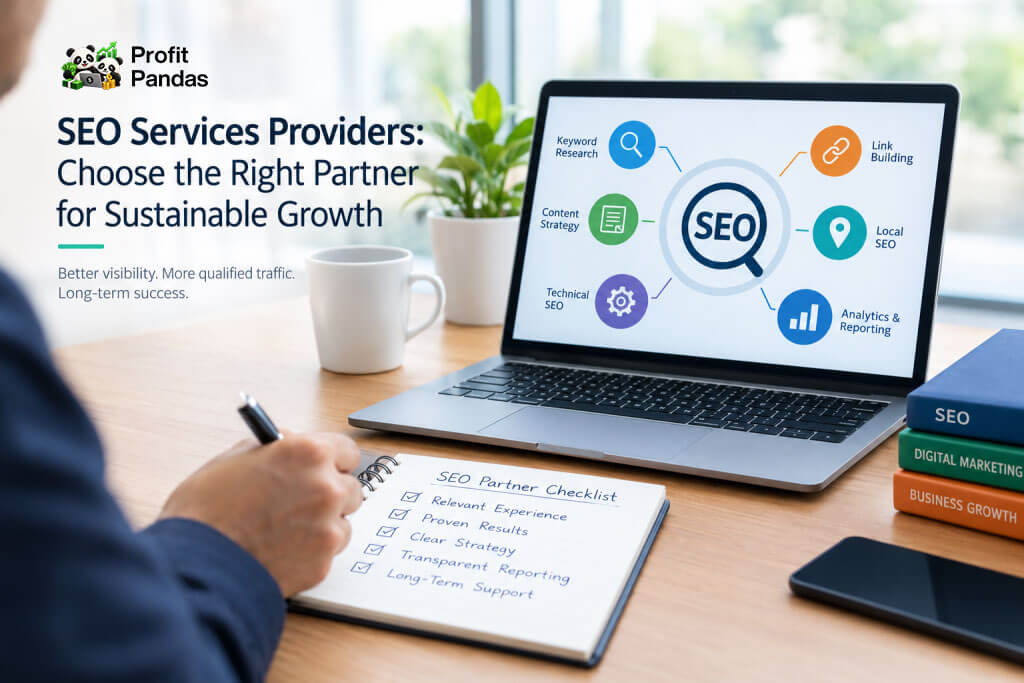
Depending on a company’s needs, an SEO provider may offer individual services or a comprehensive campaign that includes technical SEO, on-page optimization, content development, local SEO, link building, and performance reporting.
For example, a home service company may need better visibility for its plumbing or HVAC services in specific cities. An ecommerce business may need stronger product page optimization and category structures. A professional services firm may focus on building authority around specialized topics.
Although these businesses have different objectives, the underlying goal remains the same: make it easier for potential customers to discover relevant information and take the next step.
A reliable provider connects SEO activities to business priorities instead of focusing exclusively on rankings or website traffic.
What Services Should a Professional SEO Provider Offer?
Not every business needs the same SEO package. However, a well-rounded strategy typically includes several core services that work together.
1. Technical SEO
Technical SEO helps search engines discover, crawl, and understand your website. It also addresses website issues that can interfere with usability and organic performance.
Common tasks include:
- Identifying crawling and indexing problems.
- Improving website speed and mobile usability.
- Reviewing redirects, broken links, and duplicate pages.
- Evaluating website architecture and internal linking.
- Implementing appropriate structured data.
- Reviewing XML sitemaps and canonical tags.
Technical improvements provide a stronger foundation for content and other SEO activities. However, fixing every technical issue does not automatically guarantee higher rankings. Priorities should reflect the website’s actual condition and business objectives.
2. Keyword Research and On-Page Optimization
Keyword research identifies the terms people use when looking for products, services, and information. Effective research considers search intent, competition, relevance, and the value a query may bring to a business.
A professional search engine optimization company uses this information to develop a keyword strategy that maps relevant topics to appropriate pages.
On-page optimization may include improving title tags, meta descriptions, headings, page copy, image alt text, and internal links. It also involves making sure each page addresses a distinct search need rather than competing with other pages on the same website.
For example, a local plumbing company may need separate pages for water heater installation, drain cleaning, and emergency plumbing. Each page should explain its specific service, address relevant customer questions, and provide a clear path to requesting assistance.
3. Content Strategy and Development
Helpful content supports SEO by answering questions, explaining services, and demonstrating relevant knowledge. It can include service pages, educational articles, comparison guides, case studies, and frequently asked questions.
Strong content should be written for a defined audience, not created simply to insert keywords into a page.
An effective content strategy identifies information gaps, prioritizes topics based on customer needs, and connects related pages through thoughtful internal linking. It should also establish clear authorship and use reliable sources when factual claims require support.
For businesses seeking stronger visibility in AI-generated search experiences, clear explanations, useful examples, and original insights can make content easier to interpret and more valuable to readers.
4. Local SEO and Google Business Profile Optimization
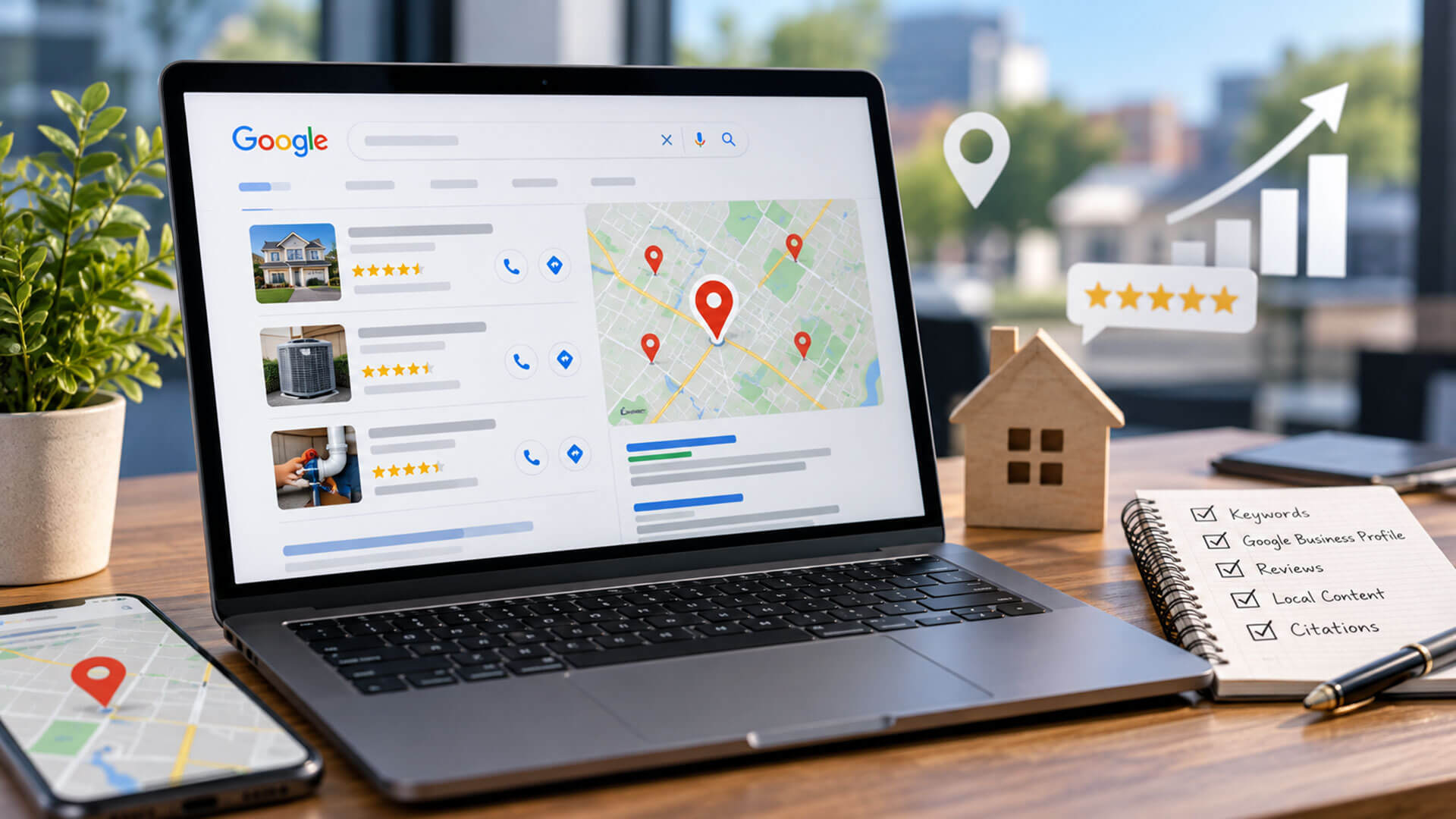
Local SEO helps businesses improve their visibility for geographically relevant searches. It is particularly important for contractors, service-area businesses, healthcare providers, and other companies serving specific communities.
Depending on the business, local SEO may include Google Business Profile optimization, accurate business information, location-specific landing pages, review management processes, local citations, and locally relevant content.
Consistency matters. Business names, addresses, phone numbers, service areas, and operating details should be accurate wherever they appear.
For home service businesses, a strong local strategy can help potential customers discover available services and understand which areas a company serves. Results still depend on factors such as competition, relevance, prominence, and the quality of the overall online presence.
5. Authority Building and Link Acquisition
Links from relevant, reputable websites can help search engines discover pages and provide useful context about a business’s online presence.
Responsible link-building strategies focus on earning meaningful references through valuable content, industry relationships, legitimate outreach, and relevant business resources.
Avoid providers that rely on spammy link networks, undisclosed paid links intended to manipulate rankings, or promises of hundreds of backlinks without explaining their quality.
The objective is not to accumulate the largest possible backlink count. It is to develop a credible online presence while protecting the website from risky practices.
6. Analytics, Reporting, and Conversion Tracking
SEO reporting should explain what is improving, what needs attention, and how the work supports business goals.
Useful measurements include organic clicks, impressions, keyword visibility, landing-page performance, qualified leads, phone calls, form submissions, and revenue where reliable tracking is available.
Google Search Console can help evaluate search impressions, clicks, and query performance. Analytics and call-tracking tools can provide additional insight into how visitors interact with the website and whether they become leads.
Without conversion tracking, a business may see increasing traffic without knowing whether that traffic generates meaningful opportunities.
How to Choose the Best SEO Services Providers
Finding the right provider requires more than comparing proposals or choosing the lowest monthly fee. Evaluate each company against your specific goals, available resources, and expectations.
Start With Your Business Objectives
Define what you want SEO to accomplish before contacting agencies. Your priority might be increasing local service inquiries, growing ecommerce sales, improving visibility for high-value keywords, or recovering from a decline in organic traffic.
Clear objectives help providers recommend relevant work rather than selling a standard package that may not address your actual needs.
Review Relevant Experience and Evidence
Ask potential partners to explain their experience with businesses similar to yours. Look for case studies, documented improvements, examples of their work, and explanations of how they measured success.
Distinguish between correlation and proven results. An increase in rankings does not necessarily establish that SEO alone caused an increase in revenue.
A trustworthy provider should communicate both achievements and limitations without promising outcomes it cannot control.
Understand the Proposed Strategy
A useful proposal should identify the website’s main challenges, recommended priorities, expected deliverables, and measurement plan.
Ask who will perform the work, whether implementation is included, how content approvals are handled, and how often progress will be reviewed.
Avoid proposals built entirely around vague promises such as guaranteed first-page rankings or instant organic growth.
Evaluate Communication and Reporting
Your SEO partner should be able to explain technical findings in understandable language and provide consistent updates.
Reports should connect completed work with measurable performance changes. When results fall short of expectations, the provider should explain potential causes and recommend appropriate next steps.
Transparency makes it easier to evaluate whether the relationship is producing value.
Consider Long-Term Value
SEO requires ongoing attention, and meaningful improvements may take several months depending on competition, website condition, resources, and the scope of work.
Compare pricing against the quality and quantity of deliverables, strategic expertise, implementation support, and reporting. The cheapest provider may leave important tasks unfinished, while an expensive package may include services your business does not need.
Choose a partner that can explain how its work supports your goals and how success will be evaluated.
SEO Agencies and Services: Which Approach Is Right for Your Business?
SEO Agencies and Services vary in their specialization, resources, and delivery models. Understanding these differences can help you select an arrangement that fits your organization.
A full-service SEO agency may be appropriate if you need coordinated technical optimization, content production, authority building, and ongoing reporting. This model can reduce the burden of managing multiple specialists.
A specialized SEO consultant may be a better fit if you already have an internal marketing team and need strategic guidance, audits, or support with a particular challenge.
A local SEO provider may be suitable for businesses whose customers are concentrated in specific geographic markets. Its work may prioritize business listings, location pages, local relevance, and reputation management.
An in-house SEO team can provide closer day-to-day collaboration and direct knowledge of your products, services, and customers. However, building an internal team requires sufficient budget, management, and access to specialized skills.
The right option depends on your current capabilities, budget, and business objectives. Some companies also combine external strategic support with in-house implementation.
When Should You Hire a Search Engine Marketing Agency?
A search engine marketing agency may be worth considering when your business needs a coordinated approach to paid search and organic visibility.
SEO focuses on earning organic search traffic, while paid search advertising uses advertising budgets to reach potential customers through sponsored placements. Although the channels operate differently, they can complement one another.
For example, paid campaigns may help a business test messaging or generate demand while its organic strategy develops. Search query data from advertising can also provide useful insights into customer language and commercial intent.
Before hiring a search engine marketing agency, clarify whether its services include SEO, paid advertising, or both. Ask how the team separates organic and paid performance in its reports and evaluates the combined contribution of each channel.
A clear scope prevents confusion about responsibilities, budgets, and expected results.
How Profit Pandas Helps Businesses Build Search Visibility
Businesses need more than isolated SEO tasks to develop a sustainable digital presence. They need a strategy that connects website performance, relevant content, search visibility, and customer acquisition.
Profit Pandas is a data-driven digital marketing agency that helps businesses strengthen their online presence through services that include SEO, paid advertising, Google Business Profile optimization, website development, tracking, and marketing analytics.
Its approach brings attention to the relationship between search performance and business outcomes. Rather than treating rankings as the only measure of success, businesses should evaluate whether their digital marketing attracts relevant visitors and supports meaningful actions.
An effective SEO program may begin with a website audit to identify technical problems, content gaps, keyword opportunities, and weaknesses in conversion tracking. From there, priorities can be organized into an actionable roadmap.
For home service businesses, this may involve improving service-page relevance, strengthening local visibility, and making it easier for prospective customers to request an estimate. For other businesses, the priorities may include content development, ecommerce optimization, or improving the measurement of organic leads.
Profit Pandas also recognizes the growing importance of answer-focused and AI-assisted search experiences. Clear website content, consistent business information, relevant expertise, and a technically accessible website provide a foundation for broader search visibility.
No agency can guarantee placement in traditional search results or AI-generated answers. The goal is to build a stronger, more useful online presence that gives search systems and potential customers clear information about your business.
How to Measure SEO Success Over Time
SEO performance should be evaluated against an established baseline and realistic objectives.
During the early stages, progress may include resolving indexing issues, improving important landing pages, strengthening internal links, or publishing useful content. These improvements create a foundation for longer-term performance.
As the campaign develops, monitor organic clicks, impressions, target keyword trends, relevant landing-page engagement, and conversions. For local businesses, review Google Business Profile performance alongside calls, inquiries, and other available lead data.
A practical reporting process should answer three questions:
- What changed? Identify improvements, declines, and significant performance trends.
- Why did it change? Explain completed work, relevant search changes, technical issues, or other plausible contributing factors.
- What happens next? Prioritize the actions most likely to address the current opportunities and limitations.
Reviewing these questions regularly helps businesses make informed decisions and adapt their strategy as conditions change.
Frequently Asked Questions About SEO Services Providers
1. What do SEO services providers do?
SEO services providers help businesses improve organic search visibility through technical SEO, keyword research, content optimization, link acquisition, local SEO, and performance reporting. The specific services depend on the website’s needs and the business’s goals.
2. How do I find the best search engine optimization company?
Start by defining your objectives, then compare providers based on relevant experience, transparent deliverables, documented evidence, communication, and measurement practices. Choose a company that can explain its strategy clearly and connect its work to your business priorities.
3. How much do professional SEO services cost?
SEO pricing varies based on competition, website size, campaign complexity, service scope, and the provider’s expertise. Request a proposal that specifies deliverables, implementation responsibilities, reporting, and any additional costs rather than comparing monthly fees alone.
4. How long does SEO take to produce results?
SEO timelines vary. Some technical improvements can be implemented relatively quickly, while measurable changes in organic visibility and leads may take several months or longer. Competition, website history, content quality, and implementation speed all influence progress.
5. What is the difference between SEO and search engine marketing?
SEO focuses on improving organic search visibility, while search engine marketing is often used to describe paid search advertising or a broader combination of search marketing activities. Ask providers to clarify which channels their services include.
6. Can SEO services providers improve AI search visibility?
They can improve the underlying quality and accessibility of a website through helpful content, clear explanations, relevant expertise, sound technical SEO, and accurate business information. These practices can support eligibility and visibility in AI-assisted search experiences, but inclusion in AI-generated answers is not guaranteed.
7. Should small businesses hire an SEO agency?
An SEO agency can be valuable when a small business lacks the time or expertise to manage search optimization internally. The decision should depend on the business’s goals, budget, competitive environment, and ability to implement recommendations.
8. What should I avoid when choosing an SEO provider?
Be cautious of guaranteed rankings, unexplained backlink packages, vague reporting, undisclosed subcontracting, and strategies that prioritize search volume over relevant customers. A credible provider should explain its methods, limitations, and performance measures.
Final Thoughts: Choose an SEO Partner That Understands Your Goals
The right SEO partner should help your business become easier to find, more useful to potential customers, and better equipped to turn online visibility into meaningful opportunities.
When comparing SEO services providers, look beyond rankings and sales promises. Evaluate the quality of the strategy, the relevance of the work, the transparency of reporting, and the provider’s ability to adapt as your business grows.
A sustainable SEO program combines technical foundations, helpful content, relevant authority signals, and reliable measurement. It also recognizes that organic search, local visibility, and AI-assisted discovery are connected parts of a broader digital presence.
Ready to Strengthen Your Online Visibility?
Profit Pandas helps businesses build data-driven digital marketing strategies designed to improve search visibility, attract relevant audiences, and support measurable growth.
Visit our website to explore digital marketing services and discover opportunities to strengthen your online presence.
About the Author
Profit Pandas Editorial Team
The Profit Pandas Editorial Team develops educational content on search engine optimization, digital marketing, paid advertising, local search, and marketing analytics. Its goal is to help businesses understand digital marketing strategies and make more informed decisions about their online growth.
For additional information about SEO and digital marketing.