
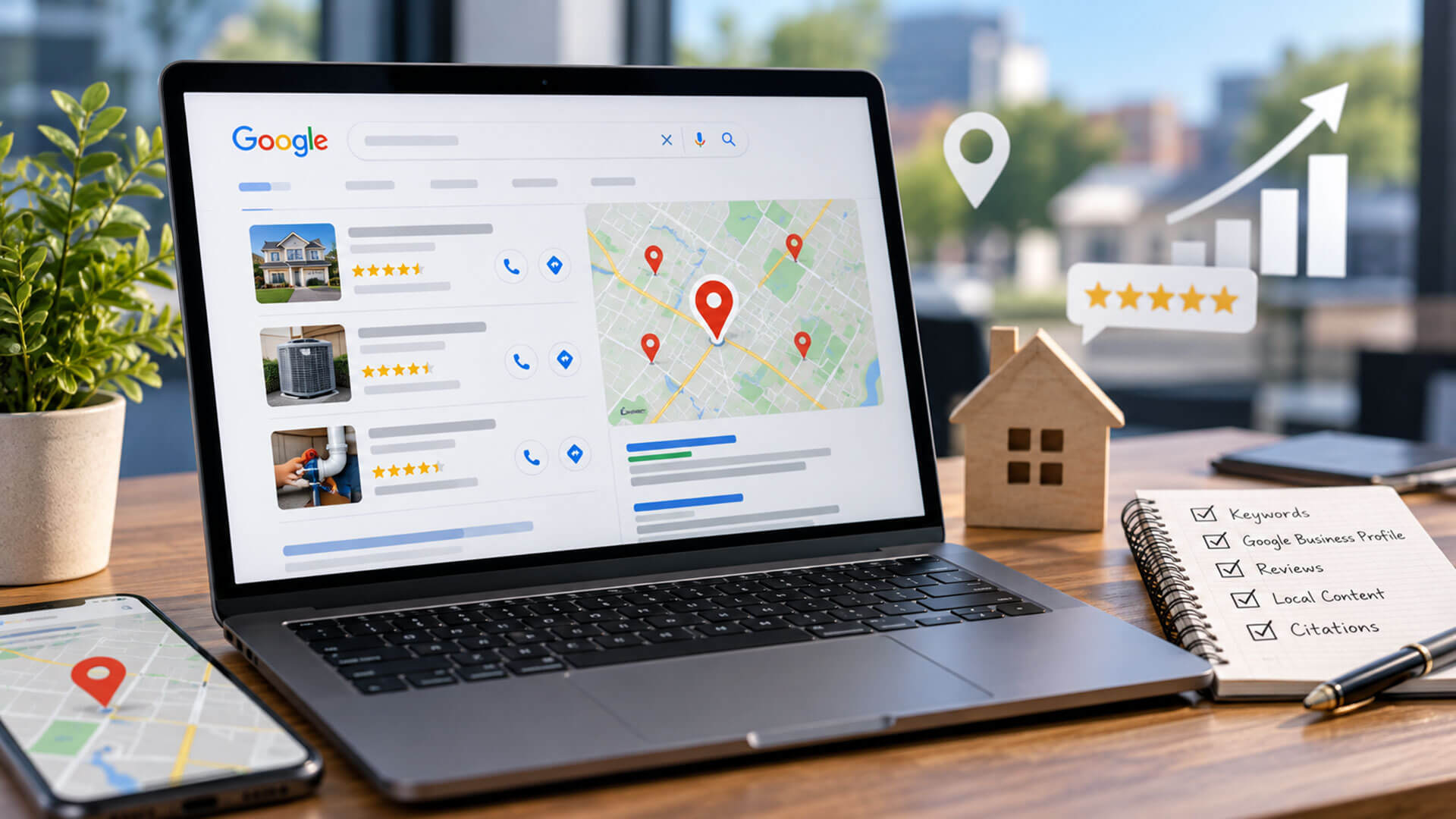
Local SEO helps nearby customers find, trust, and contact a business on Google Maps, Google Search, and other local channels. For most small firms, the best local SEO strategies start with the basics: a complete Google Business Profile, strong service pages, steady citation building, good reviews, and local backlinks. Profit Pandas treats these parts as one system, because local visibility rarely improves from one isolated tweak. This guide covers the main local ranking factors and the SEO for businesses work that matters most.
What are the most important local ranking factors?
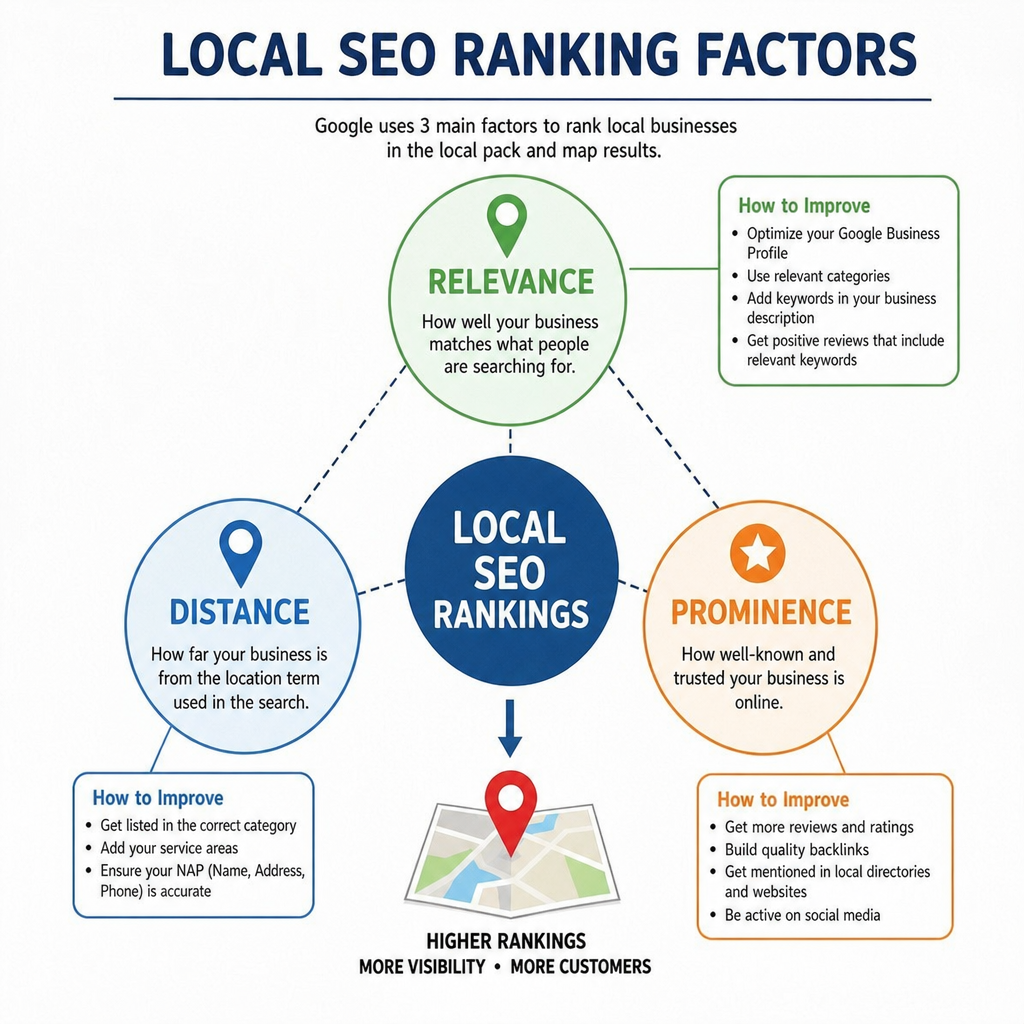
The main local ranking factors help search engines answer three questions. Does this business fit the search? Is it close enough to the searcher? Is it trusted enough to show?
Google frames local ranking around relevance, distance, and prominence. It also recommends complete business info, accurate hours, reviews, photos, and verified profiles to improve local visibility.
- Relevance: Does your profile, website, and content match the service someone wants?
- Distance: Is your location or service area a good fit for the person searching?
- Prominence: Do reviews, links, directories, articles, and overall web presence show that your business is known and trusted?
This matters because the local map pack and local organic results use different but overlapping signals. BrightLocal’s local ranking research says Google Business Profile signals matter most for the Local Pack and Maps, while on-page factors and links matter more in local organic results.
Your Google Business Profile sets the local base
Your Google Business Profile, still called Google My Business by many owners, is often the first thing a searcher sees. It should be accurate, complete, and kept up to date. Google’s guidance says to use the real-world name, keep the address or service area correct, and use only the categories needed to describe the core business.
Start with the basics:
- Correct name, address, phone number, website, and primary category.
- Hours and holiday hours.
- Services, products if relevant, business description, photos, and attributes.
Do not stuff keywords into the business name unless they are part of the real name. That shortcut can hurt trust and can break profile rules.
A strong profile also answers buyer questions before they call. A hair stylist might list bridal styling, color fixes, extensions, and consults. A plumber might split emergency repair, drain clearing, water heater service, and fixture installs. These local seo tips make the profile easier for customers and Google to read.
Local keyword research turns services into demand
Local keyword research finds the phrases people use when they need a nearby service. Good research blends service terms, city terms, and buying intent. Instead of only broad words like ‘salon’ or ‘contractor’, look for phrases like ‘bridal hair consultation in [city]’, ’emergency plumber near [neighborhood]’, or ‘commercial HVAC maintenance [metro area]’.
Useful keyword sources include Google typeahead, Search Console queries, customer questions, competitor page titles, GBP service categories, and paid SEO tools. The goal is not to cram every phrase onto one page. It is to map each search to the right page.
A simple keyword map might look like this:
- Brand search: Profit Pandas local SEO -> homepage or brand page
- Core service: local SEO for businesses -> service page
- City service: bridal makeup artist Austin -> location/service page
- Comparison: local SEO vs general SEO -> blog post
- Urgent need: same-day appliance repair near me -> GBP plus service page
Once you have the map, use keywords naturally in title tags, headings, service copy, image alt text, internal links, and body copy. The best local seo tips are simple: write like a helpful owner, not like a keyword sheet.
Citation building creates consistency and trust
Citation building means creating and cleaning up business listings across directories, maps, industry sites, and local platforms. These listings confirm NAP: name, address, and phone number. When the details do not match, customers can get confused and search engines may trust the business less.
Focus first on major platforms and directories that matter in your market. Then add niche citations, such as wedding sites for beauty professionals, legal directories for attorneys, healthcare directories for clinics, or chamber of commerce listings for local service companies.
A practical checklist:
- Use the same business name format everywhere.
- Keep phone numbers consistent, especially if call tracking is used.
- Match website URLs to the most useful page.
- Update hours when they change.
- Remove or merge duplicate listings when possible.
- Add categories, photos, and descriptions where the platform allows.
Citations also support prominence because Google says prominence can come from information across the web, including links, articles, and directories.
Reviews influence rankings and decisions
Reviews are not just a reputation feature. They also help people decide whether to contact you. Google recommends asking for reviews without incentives, replying to reviews, valuing balanced feedback, and keeping replies professional and relevant.
Build a repeatable review process that fits the customer flow. Ask after a good appointment, finished project, delivery, consult, or follow-up. Make the request easy with a direct link or QR code, but never pressure people or offer discounts for reviews.
Replies matter too. For positive reviews, mention a service or experience when it fits. For negative reviews, stay calm, avoid private details, acknowledge the issue, and invite the person to continue offline.
Local backlinks build authority beyond your site
Local backlinks are links from nearby or industry sites that point to your business. They can come from local news, community groups, sponsor pages, partner businesses, associations, schools, events, podcasts, supplier pages, or neighborhood blogs. These links can strengthen local prominence and support organic rankings.
The best local backlinks usually come from real relationships. Sponsor a charity event, work with another business, give a quote to a local publication, host a workshop, or join a group. For beauty professionals, this can include links from wedding venues, photographers, bridal shops, local fashion events, beauty schools, or stylist lookbooks.
Avoid low-quality link schemes. A small number of real, relevant links is usually better than a large batch of weak ones. Ask whether the link would still be useful if search engines did not exist. If yes, it is probably worth it.
On-site local SEO connects your site to your market
Your website should match the same local signals as your profile and citations. Each key service needs a clear page that explains who it is for, what is included, where it is offered, and what the next step is. For multi-location businesses, create unique location pages instead of copying one page and swapping city names.
Strong local pages usually include:
- A clear service and location focus.
- Simple details about process, timing, or fit.
- Local proof points you can support, such as neighborhoods served or project types.
- Internal links to related services and contact pages.
- Consistent NAP info.
- Fast, mobile-friendly design.
- Schema where it fits.
Service-area businesses should be careful. If customers do not visit your address, explain the areas you serve without pretending you have offices everywhere. Brick-and-mortar businesses should make visits easy with directions, parking details, booking steps, and map context when useful.
How should local SEO strategies change by business type?
Local SEO strategies should change based on how people use the business. A storefront, service-area business, hybrid business, multi-location company, and solo professional all need the same base, but each one needs a different focus.
For a storefront, the physical location matters most. Focus on hours, categories, photos, directions, reviews, and nearby search terms. For a service-area business, explain coverage areas clearly and build service pages around real customer needs. For multi-location businesses, each location needs its own profile, location page, local photos, reviews, and unique content.
Local SEO strategies for beauty professionals should be even more visual and service-based. A makeup artist, lash tech, barber, skin tech, or bridal stylist can benefit from detailed service pages, portfolio images, review requests after appointments, and partnerships with photographers, venues, boutiques, and event planners. Keywords should reflect how clients search: occasion, service, style, location, and urgency.
Measurement keeps local SEO grounded
Local SEO improves with steady measurement, not guesswork. Track visibility, clicks, calls, direction requests, form fills, bookings, keyword movement, citation accuracy, and review growth. Google Search Console can show local queries that bring users to your site, while rank trackers and listing tools can help monitor map visibility, citations, and reviews across locations.
Do not obsess over one keyword from one place. Local results shift based on proximity, personalization, device, competition, and search wording. A better plan is to watch groups of keywords, service pages, profile actions, and lead quality over time.
AI search is changing how people find local businesses too. The safe move is not to chase gimmicks. Keep business info complete, earn mentions on trusted local sites, answer customer questions clearly, and stay consistent where customers already look.
Common mistakes that hold local rankings back
Many local campaigns struggle because the basics are not done well. Before you chase advanced tactics, audit the core pieces.
Watch for these issues:
- Incomplete or unverified business profiles.
- Wrong categories or thin service descriptions.
- Keyword-stuffed business names.
- Inconsistent NAP details across directories.
- Duplicate listings.
- Slow or hard-to-use mobile pages.
- Generic location pages with copied content.
- Ignored reviews or defensive replies.
- Backlinks from irrelevant, low-quality sites.
- No tracking for calls, forms, bookings, or direction requests.
The fix is usually a steady routine: clean up info, improve pages, request reviews the right way, build local relationships, publish useful content, and measure what changes.
The takeaway
Top local SEO is not about one magic ranking factor. It is the mix of relevance, distance, prominence, profile quality, website clarity, citation building, reviews, and local authority. Businesses that treat these as one system are easier for search engines to understand and easier for customers to choose.
For stronger local visibility, start with the assets closest to conversion: your Google Business Profile, service pages, reviews, and contact paths. Then build outward with citation building, local backlinks, and content that answers the real questions nearby customers ask. Profit Pandas can use the same practical framework to turn local SEO from a confusing checklist into a focused growth channel.
Frequently Asked Questions
Where should a small business start if it has limited time for local SEO?
Start with the assets closest to conversion: the Google Business Profile, core service pages, reviews, and contact paths. Make sure the profile is verified, complete, and accurate. Then improve the website pages that explain the business’s main services and locations. After that, build consistency through citations, earn reviews the right way, and pursue credible local backlinks.
Why is a complete Google Business Profile so important for local visibility?
A Google Business Profile often acts as the first impression in Maps and local search results. It helps Google and customers understand the business’s name, category, location or service area, hours, services, photos, and contact options. A complete, accurate, and active profile supports relevance, distance, and prominence while making it easier for searchers to decide whether to call, visit, or book.
How are citations different from local backlinks?
Citations are business listings that confirm key details such as name, address, and phone number across directories, maps, industry platforms, and local websites. Local backlinks are links from nearby or relevant websites that point to the business’s site. Citations mainly support consistency and trust, while local backlinks help build authority and prominence beyond the business’s own website.
How should service-area businesses handle local SEO without creating fake location pages?
Service-area businesses should clearly explain the real areas they serve and build useful service pages around actual customer needs. They should avoid pretending to have offices in cities where they do not operate. Instead, they can strengthen local relevance with honest coverage info, service-specific content, reviews, citations, and local partnerships.
What metrics matter most when measuring local SEO progress?
Useful metrics include profile actions, calls, clicks, direction requests, form fills, bookings, review growth, citation accuracy, keyword movement, and lead quality. Tracking groups of keywords, service pages, and customer actions over time is better than focusing too heavily on one ranking from one location.
About the Author
Profit Pandas
Profit Pandas is a data-driven digital marketing agency focused on helping businesses strengthen their online presence, attract qualified leads, and achieve measurable growth. Its services include SEO, paid advertising, Google Business Profile optimization, AEO and GEO, website development, conversion optimization, analytics, automation, and other digital marketing solutions.
With experience across search optimization, local SEO, paid advertising, website performance, and AI-powered search, Profit Pandas develops strategies designed to connect online visibility with meaningful business outcomes. Its approach combines search intent, technical SEO, helpful content, local authority, conversion-focused website improvements, and reliable performance tracking.
The Profit Pandas team shares practical insights on SEO, home service marketing, Google Ads, Local Services Ads, website performance, and AI search. Its content is designed to help business owners better understand digital marketing, identify opportunities for improvement, and make informed decisions about their online growth.