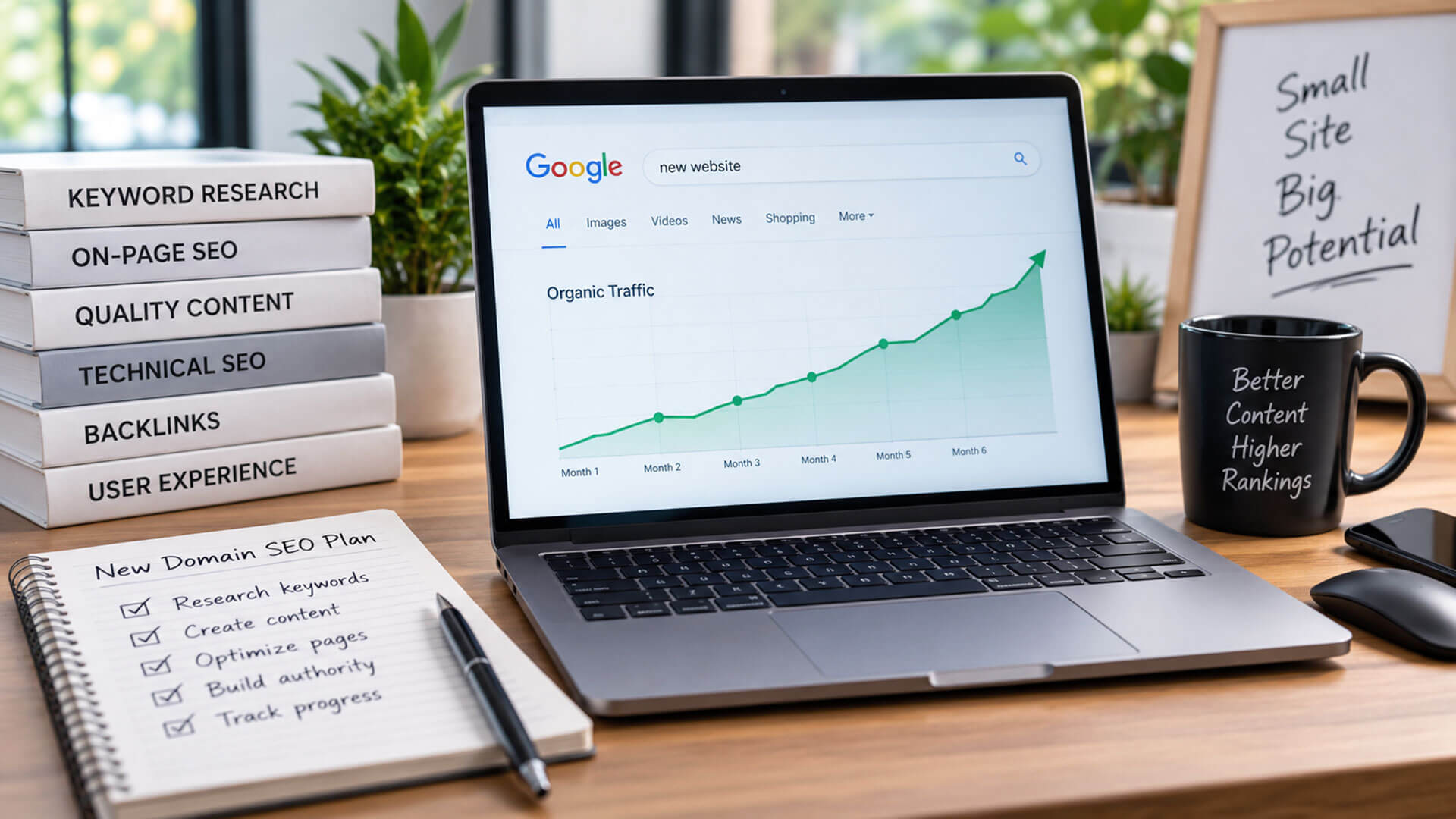

Good SEO services help people find your business, trust it, and choose it.
The right partner does more than chase rankings. They tie site fixes, content, local work, conversion paths, and reporting to real business goals.
If you are comparing an SEO agency, looking for SEO consulting, or checking a specialist like Profit Pandas, start by asking what good SEO services should include.
What should an SEO services provider do?
An SEO services provider should improve how your site shows up in search and how often that visibility turns into leads, sales, calls, bookings, or qualified inquiries.
That usually means SEO analysis, technical fixes, content planning, keyword work, local visibility, and reporting in one plan.
A good provider should explain what they do, why it matters, how it supports your goals, and how success will be measured.
Good SEO is not one task. It is a steady process of finding wins, clearing blocks, writing useful content, improving site quality, and adjusting as search changes.
For a local business, that may mean better service-area pages and Google Business Profile work.
For an ecommerce brand, it may mean category page changes, product schema, content hubs, and tech cleanup.
For a plumbing or HVAC company, it often means local pages, call tracking, reviews, and service content that fits urgent search intent.

The core services behind effective SEO marketing
Most good providers mix basic work with advanced work. The exact scope should match your site, market, budget, and growth goals, but the core pieces are often the same.
A complete SEO setup often includes:
- SEO audit and discovery: Review site layout, tech health, content, backlinks, keyword reach, competitors, and conversion paths.
- Keyword and intent research: Find the terms people use and why they search, such as research, compare, buy, need help now, or need a local service.
- Technical SEO: Fix crawl, index, speed, mobile use, internal links, schema, duplicate pages, and broken links.
- On-page SEO optimization: Improve titles, meta descriptions, headings, copy, alt text, page layout, and internal links.
- Content strategy and creation: Write blog posts, service pages, location pages, buying guides, FAQs, case stories, and helpful resources.
- Local SEO: Improve Google Business Profile, citations, map results, reviews, location signals, and service-area targeting.
- Authority building: Earn links, run digital PR, share content, and build trust.
- Reporting and analytics: Track organic traffic, rankings, leads, calls, conversions, revenue, and next steps.
The best SEO marketing plans do not treat these jobs as separate pieces. One page may need keyword changes, better copy, faster load time, internal links, schema, and a stronger call to action before it can compete.
A provider that sees the full picture will usually build more momentum than one that chases rankings alone.
Service scope changes by business model
A software company, a local HVAC contractor, and a regional plumbing company should not get the same plan. Search intent, competition, buying cycle, and conversion behavior are different. This is where niche matters.
For local and home service businesses, home service seo should focus on closeness, urgency, trust, and service details.
Someone searching for a burst pipe, broken furnace, clogged drain, or emergency AC repair wants fast answers, proof you can help, and an easy way to call or book.
That means location pages, service pages, reviews, mobile speed, clear phone numbers, and correct business info matter as much as blog posts.
For seo plumbing campaigns, a provider may build pages for drain cleaning, water heater repair, sewer line service, emergency plumbing, leak detection, and nearby towns or neighborhoods.
For hvac seo, the structure may include AC repair, furnace install, heat pump service, maintenance plans, indoor air quality, and seasonal tune-up content.
In both cases, the goal is not just traffic. It is the right local visitors when they are ready to act.
Ecommerce SEO needs a different plan. Product filters, category pages, faceted nav, duplicate content, product descriptions, internal search, and structured data matter more.
B2B SEO often leans on thought leadership, compare pages, industry pain points, demo requests, and long buying cycles.
A good provider should adjust seo strategies to the way your customers search and buy.
How do you choose the right SEO agency?
Choose an SEO agency by looking for clear strategy, open reports, ethical methods, relevant experience, and a practical grasp of your goals.
The right agency should ask about revenue, lead quality, margins, geography, sales process, and customer value before it promises a plan.
If the pitch starts and ends with we will get you rankings, keep asking questions.
A good partner should explain its process in plain language. You should know what will happen in the first month, what outputs you will get, how priorities are set, and how communication works.
You do not need to become an SEO expert, but you should never feel shut out of the plan.
Use this checklist when you compare providers:
- Process: Can they explain how they audit, prioritize, do, and measure SEO work?
- Transparency: Will you see clear reports, finished tasks, next steps, and trend lines?
- Business fit: Do they link SEO goals to leads, calls, bookings, sales, or pipeline quality?
- Industry fit: Have they worked with local services, ecommerce, B2B, or multi-location brands?
- Technical skill: Can they spot and explain tech issues without jargon?
- Content quality: Do they write for readers, not just for keywords?
- Ethics: Do they avoid spam links, hidden text, copied content, or fake location pages?
- Adaptability: Can they adapt as search results, competitors, and customer behavior change?
- Communication: Do they give you one point of contact, regular updates, and real expectations?
- Reporting: Do they track real results, not just vanity numbers?
If you are considering Profit Pandas or any other provider, use the same checklist.
A good partner should welcome hard questions because clear expectations help both sides.
The role of SEO tools and analysis
Modern SEO depends on data, but tools alone do not make a plan.
SEO tools can show keyword gaps, crawl errors, competitor gaps, backlink patterns, ranking shifts, content performance, and tech issues.
What matters is how a provider reads that data and turns it into action.
For example, a tool may show that a service page has impressions but few clicks.
A shallow response would be to add more keywords.
Strong SEO analysis would look at the title tag, search intent, page quality, competing results, local relevance, schema, internal links, reviews, and calls to action.
The issue might be weak positioning, poor page layout, missing trust signals, or content that does not answer the searcher’s real need.
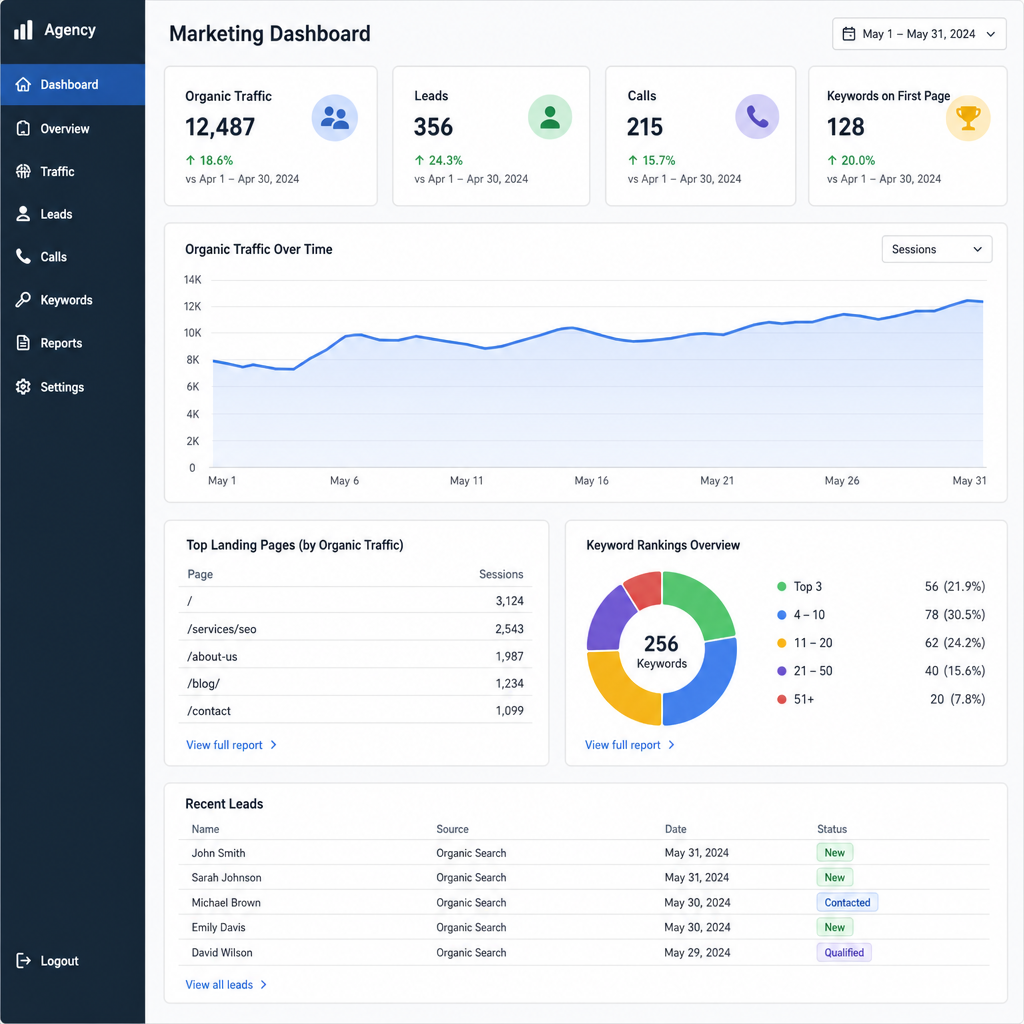
Good reporting should be clear and decision-ready.
Instead of a dense dashboard with no help, a provider should show what changed, what it means, what was done, what comes next, and where business impact is showing up.
Useful metrics include organic sessions, local visibility, qualified leads, phone calls, form submissions, conversion rate, indexed pages, ranking movement for key terms, and revenue influence where tracking allows.
SEO, PPC, and the long-term growth mix
SEO and paid search are not enemies. They solve different problems.
Paid search can bring fast visibility as long as spend keeps going.
SEO usually takes longer, but the value can grow over time as your site earns stronger reach, deeper content, and more trust.
For many businesses, the smartest move is not choosing one forever.
PPC can test which messages, offers, locations, and keywords convert.
SEO can then use those lessons to shape content, page layout, and optimization priorities.
At the same time, organic reach can cut dependence on paid traffic for queries where your site becomes steady in search.
| Channel | Best for | Limit | Smart use case |
| SEO | Steady organic traffic and trust | Takes time and steady work | Long-term lead flow from service pages, content, and local search |
| PPC/SEM | Fast visibility and testing | Traffic stops when spend stops | Launches, urgent leads, and offer tests |
| SEO + PPC | Short- and long-term growth | Needs one plan | Use paid data to shape SEO strategies and landing pages |
The right mix depends on your market.
A new company in a crowded city may need paid campaigns while SEO foundations are still being built.
An established company with a strong site may shift more investment toward content growth, local authority, and conversion gains.
How long does SEO take to show business impact?
SEO often needs several months of steady work before the trend is clear, especially in tough markets.
Some fixes, like indexing issues or high-potential page updates, may move faster.
Authority building, content growth, and local strength usually take longer.
A trustworthy provider will not promise instant results because durable SEO depends on competition, site health, content quality, search demand, and speed of execution.
The first stage is diagnosis and foundation work.
That may include audits, tracking setup, technical repairs, keyword mapping, content planning, and priority page updates.
The second stage grows reach through service pages, educational content, internal links, local signals, and authority work.
The third stage is refinement: check what works, improve conversion rates, update old content, and react to market changes.
Judge business impact by trends, not single snapshots.
One ranking jump is good news, but more qualified calls, stronger local visibility, better organic conversion rates, and less need for paid traffic matter more.
If the provider cannot tie work to results, the campaign may become busywork instead of growth work.
Red flags that deserve a closer look
Not every SEO provider works with the same level of care.
Some use vague packages, recycled deliverables, or tactics that create short-term movement at the cost of long-term stability.
Others may mean well but lack the technical or strategic depth your market needs.
Watch for these warning signs:
- Guaranteed number-one rankings without context or caveats.
- No talk about your business model, location, margins, or lead quality.
- Reports that show rankings but ignore leads, conversions, or revenue.
- Refusal to explain link building or content strategy.
- Too many generic blog posts that do not help real customers.
- Thin location pages made only to game search results.
- No technical audit or no help working with your developer.
- Unclear pricing, keeps changing, or is not tied to outputs.
- Claims that SEO is a one-time setup instead of ongoing growth.
A good provider will not make everything sound easy.
They will show trade-offs, explain priorities, and say what is realistic for your budget and market.
That honesty is a strength.
AI, voice search, and the next layer of SEO
Search is getting more complex as people use AI assistants, voice search, map results, featured snippets, review sites, and standard search engines in different ways.
This does not make classic SEO useless.
It makes clear writing, authority, structure, and usefulness more important.
AI-shaped search results tend to reward content that is easy to read, well ordered, and backed by clear topic skill.
Voice searches often sound natural and local, such as who repairs water heaters near me or best HVAC company open today.
For service businesses, that means content should answer real questions in plain language while still using strong technical structure.
Providers offering modern SEO consulting should be able to discuss these changes without overselling.
No agency can control every AI answer or promise placement on every new search surface.
What they can do is strengthen your site foundation: correct business info, useful service content, structured data, trust signals, fast pages, and steady local visibility.
A practical way to compare providers
Before you sign with any SEO services provider, make a simple comparison sheet.
It keeps the choice grounded and makes it easier to spot the gap between a good sales pitch and a real growth plan.
Include these categories:
- Primary goals: More calls, better leads, ecommerce revenue, local map visibility, brand authority, or less paid-ad use.
- Services included: Technical SEO, content, local SEO, link earning, reporting, conversion support, and consulting.
- First 90 days: Audit, tracking, quick wins, page updates, content plan, technical fixes, and a clear communication rhythm.
- Success metrics: Organic traffic, lead volume, lead quality, calls, form fills, rankings for key terms, and conversion rate.
- Team access: Who leads strategy, who writes content, who handles technical notes, and who answers questions.
- Risk profile: Ethical tactics, clear link practices, fair expectations, and no shortcut promises.
- Fit: Experience with your industry, geography, customer journey, and sales cycle.
This exercise also helps you clarify what you need.
Some businesses need full service. Others need SEO consulting to guide an in-house team.
Some need a local specialist for home service seo, while others need broader content and technical support.
The best provider makes SEO easier to understand
SEO can feel hard because it touches so many parts of a business: website code, content, brand trust, local reputation, analytics, sales, and customer behavior.
A strong provider makes that complexity simpler without acting as if it does not exist.
They give you a roadmap, explain priorities, and keep the focus on progress that matters.
If you are comparing SEO services providers, look beyond the length of the proposal or the size of the deliverables list.
Ask whether the strategy fits your market, whether the reporting will help you make decisions, and whether the team can adapt as results come in.
The right partner will combine technical skill, strategic thinking, useful content, and open communication.
For local service companies, that may mean stronger seo plumbing or hvac seo pages that catch urgent demand.
For growing brands, it may mean content systems and tech improvements that build authority over time.
In every case, the goal is the same: use SEO to make your business easier to find, easier to trust, and easier to choose.
Frequently Asked Questions About SEO Services
What are SEO services?
SEO services are strategies and ongoing activities designed to improve a website’s visibility in organic search results. They can include technical SEO, keyword research, on-page optimization, content creation, local SEO, link building, conversion optimization, and performance reporting.
What should be included in a good SEO service?
A comprehensive SEO service may include an initial audit, keyword and search-intent research, technical optimization, on-page improvements, content strategy, local SEO, authority building, analytics, and ongoing reporting. The exact services should depend on the website, industry, competition, and business goals.
How do I choose an SEO services provider?
Look for a provider that explains its process clearly, connects SEO work to business goals, provides transparent reporting, uses ethical optimization methods, and has experience relevant to your industry. Ask what will be completed during the first 90 days and how results will be measured.
How long does SEO take to produce results?
SEO typically takes several months of consistent work before meaningful trends become clear. Some technical fixes and page improvements can produce changes sooner, while content growth, authority building, and competitive keywords often require more time. Results depend on factors such as competition, website condition, content quality, and execution.
Is SEO better than PPC?
SEO and PPC serve different purposes, so they are not necessarily alternatives. PPC can provide immediate paid visibility and help test keywords, offers, and landing pages, while SEO is designed to build sustainable organic visibility over time. Many businesses use both channels as part of their digital marketing strategy.
What is local SEO for service businesses?
Local SEO helps businesses appear when potential customers search for services in specific geographic areas. It can include Google Business Profile optimization, service-area pages, local citations, reviews, location signals, technical SEO, and content targeting local search intent.
Why is technical SEO important?
Technical SEO helps search engines crawl, understand, and index a website while also improving the user experience. It can address issues involving site speed, mobile performance, broken links, duplicate content, internal linking, indexing, structured data, and website architecture.
How can SEO help plumbing and HVAC companies?
SEO can help plumbing and HVAC companies reach customers searching for specific services, locations, and urgent solutions. Service pages, location content, Google Business Profile optimization, reviews, internal links, and conversion-focused pages can help connect relevant searches with calls, bookings, and inquiries.
What SEO metrics should a business track?
Useful SEO metrics can include organic traffic, keyword visibility, local search performance, qualified leads, phone calls, form submissions, conversion rates, indexed pages, and revenue where tracking is available. Rankings are useful, but they should be considered alongside actual business outcomes.
Should an SEO agency guarantee rankings?
Businesses should be cautious about guarantees of specific rankings because search results depend on competition, location, search intent, algorithm changes, and many other factors outside an agency’s direct control. A credible provider should explain realistic expectations and focus on measurable improvements rather than guaranteed positions.
What is the difference between SEO consulting and managed SEO services?
SEO consulting generally provides strategic guidance, recommendations, audits, and direction that an internal team or developer can implement. Managed SEO services typically include ongoing execution, such as technical optimization, content, local SEO, link building, monitoring, and reporting.
Does SEO still matter with AI search?
Yes. AI-powered search adds new ways for people to discover information, but strong website fundamentals remain important. Clear content, useful answers, technical accessibility, accurate business information, structured data, authority, and trustworthy signals can support visibility across traditional and emerging search experiences.
What should an SEO report include?
An SEO report should clearly explain what was completed, what changed, what the data means, and what should happen next. Depending on the campaign, it may include organic traffic, keyword trends, local visibility, technical improvements, content performance, leads, calls, conversions, and other relevant business metrics.
About the Author
Profit Pandas
Profit Pandas is a data-led digital marketing agency that helps businesses grow their online presence, win qualified leads, and turn digital marketing into measurable growth. The agency provides SEO, paid ads, Google Business Profile work, AEO and GEO, website development, conversion optimization, analytics, automation, and other digital marketing services.
With experience in search optimization, local search, paid ads, website performance, and AI-powered search, Profit Pandas builds strategies that connect visibility with business results. Its approach blends search intent, technical SEO, helpful content, local authority, conversion-focused site work, and accurate tracking.
The team shares practical ideas on SEO, home service marketing, Google Ads, Local Services Ads, website performance, and AI search. The content helps business owners understand digital marketing, spot opportunities, and make smart choices about online growth.