A new website can rank in search in 2026, but it needs a tighter plan than ‘publish a few pages and wait’. These SEO ranking strategies for a new domain in 2026 work best when they combine clear topics, useful content, clean technical work, local trust, and steady link building. For an HVAC company, plumbing company, or other home services brand, the goal is not to look big. It is to become the clearest answer for the problems local customers already search for.
Why are new domains harder to rank in 2026?
New domains start with little history, few backlinks, weak brand signals, and little proof that people find the site useful. Search engines can crawl a new site fast, but ranking well takes more than that. New domain ranking strategies SEO 2026 should focus on pages that match real search intent, internal links that show topic depth, and outside signals that build trust. Google’s guidance for Search and AI features still points to the basics: easy crawling, helpful people-first content, internal links, page experience, text access, and structured data that matches visible page content.
That does not mean a new domain is doomed. It means the plan has to be narrow and smart at the start. A new local HVAC site, for example, is unlikely to outrank major directories for broad searches right away, but it can compete for focused searches like emergency AC repair in a specific city, furnace short cycling causes, or heat pump maintenance before winter. The win comes from building relevance in layers instead of chasing every possible keyword at once.
The first job is choosing a winnable topical lane
A common mistake with new sites is spreading content too thin. One week the blog covers coupons, the next week it covers national industry trends, then a few random service pages appear with nearly the same wording. That makes search optimization harder because the site does not send a clear signal about what it knows, whom it serves, or which problems it solves.
For a new domain, start with one practical lane. A plumbing company might focus first on drain cleaning, water heater repair, and emergency plumbing in its core service area. An HVAC company might start with AC repair, furnace repair, maintenance plans, and indoor air quality. Once that base is strong, the site can grow into deeper support topics.
Good keyword strategies begin with search intent, not search volume alone. A small business does not need thousands of visitors who will never call. It needs the right visitors: homeowners comparing choices, customers with urgent problems, and people looking for a trusted provider nearby.
A focused first-phase keyword plan may include:
- Core service keywords such as AC repair, drain cleaning, furnace installation, or water heater replacement.
- Local modifiers such as neighborhood, city, county, or near me style intent.
- Problem-based searches such as why is my AC blowing warm air or toilet keeps running after flush.
- Cost and timing searches written carefully without inventing exact prices, such as what affects water heater replacement cost.
- Comparison searches such as tank vs. tankless water heaters or repair vs. replacement.
- Seasonal searches tied to real customer behavior, such as furnace tune-ups before cold weather or AC maintenance before summer.
The point is not to stuff every phrase onto every page. The point is to map each keyword group to a page that answers a specific need better than a generic competitor page can.
What SEO tactics should a new domain prioritize first?
A new domain should prioritize the SEO tactics that make it easy to crawl, easy to understand, and useful for a clear audience. That means strong service pages, a simple internal link structure, better on-page SEO, local details that build trust, and relevant links over time. Google says useful content can matter more than many small tweaks, and valid structured data can help pages become eligible for some Search features.
Start with the pages closest to revenue. For a home services company, that usually means service pages, service-area pages, contact pages, and high-intent support content. Blog posts can help, but they should support the buyer journey.
Build service pages that help customers decide
A service page should do more than say, We provide fast, reliable service. It should explain the problem, what the service includes, warning signs, common options, what affects timing or cost, and when to call a pro. This is where content optimization becomes practical: the page is not strong because it repeats a keyword, but because it answers the real questions behind that keyword.
For example, an AC repair page can include:
- Common symptoms, such as warm air, short cycling, odd noises, weak airflow, or frozen coils.
- Possible causes explained in plain English, without pretending to diagnose every situation online.
- What a technician usually checks during a service visit.
- When repair may make sense and when replacement may be worth talking about.
- Internal links to related pages, such as maintenance, thermostat issues, ductwork, or emergency service.
- A clear next step, such as calling, booking online, or requesting an estimate.
That structure gives search engines more context and gives customers more confidence. It also helps the page rank for more long-tail searches because the content covers the topic naturally.
Use internal links like a guided path
Internal links matter for new domains because they help users and crawlers find important pages. A pillar page on HVAC services can link to AC repair, furnace repair, heat pump installation, maintenance plans, and indoor air quality. Each page can link back to the main HVAC page and sideways to related resources.
This is how topical authority starts. You are not relying on one big page to rank for everything. You are building a connected library where each page has a job, and the links show how those jobs fit together.
Make every page locally believable
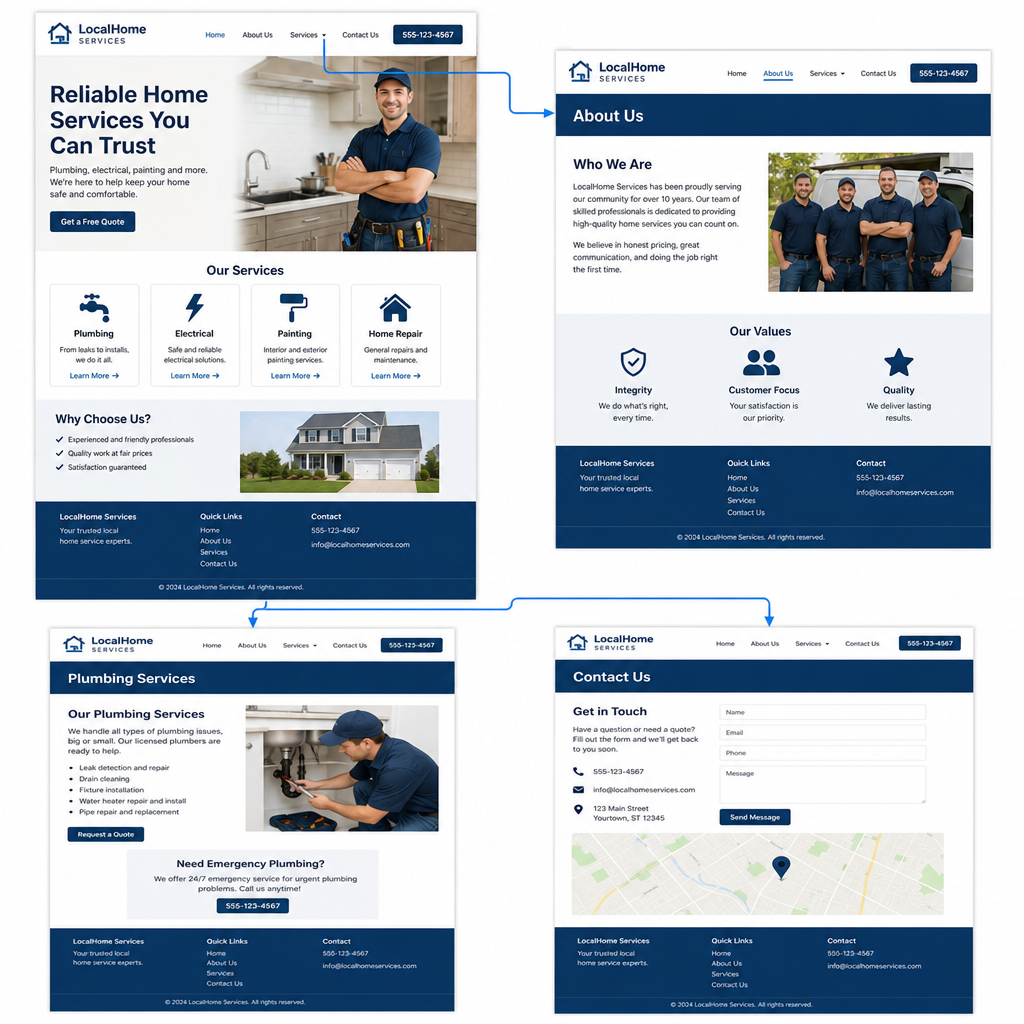
Local businesses should avoid vague copy that could belong to any company in any city. A home services site should mention real service areas, common local needs, seasonal conditions, and practical customer scenarios. Do this naturally. The page should not become a list of city names; it should read like it was written for people in the area.
Helpful local trust elements include:
- Service-area clarity.
- Business name, phone number, and contact options.
- Photos of real work, vehicles, equipment, or team members when available.
- Clear explanations of licensing, insurance, warranties, or guarantees only if they are true and provided by the business.
- Reviews only when they are authentic and approved for use.
- Links between the website and the business’s local profiles where appropriate.
A new site earns trust faster when it feels specific, grounded, and easy to verify.
AI search rewards clarity, not gimmicks
AI-driven search has changed how people find answers, but it has not removed the need for sound SEO. Google’s documentation says the same basic best practices apply to AI Overviews and AI Mode, and that pages must be indexed and able to show a snippet to appear as support links. Google also says there is no special schema or machine-readable file needed just for those AI features.
For new domains, that is good news. You do not need a hidden AI SEO trick. You need content that is clear for people, well organized for search systems, and different enough that it does not feel like a recycled summary of the web.
The best AI-era content usually includes:
- Short direct answers near the top of key sections.
- Natural phrasing that matches how people ask questions aloud.
- Specific examples from the business’s real services or audience.
- Original notes from technicians, owners, or customer-facing staff.
- Helpful media, such as photos, diagrams, or short videos, when they make the topic easier to understand.
- Clear page structure with descriptive headings and simple subtopics.
If Profit Pandas or an internal marketing team is planning a new domain, this is where the work should become more human, not more robotic. Generative tools can help with drafts and outlines, but the strongest pages include details only the business can provide: common service calls, real customer concerns, seasonal patterns, and practical advice from field experience. Google’s guidance on generative AI search stresses unique, useful, people-first content and warns against making lots of pages just to chase every possible query variation.
How should home services businesses adapt for AI and voice search?
Home services businesses should adapt by writing the way customers ask for help: clearly, locally, and naturally. Voice searches often sound like full questions, such as Why is my breaker tripping when the AC turns on? or Who fixes a leaking water heater near me? A good page answers those questions first, then adds enough detail for the next step.
This does not mean every page needs a huge FAQ section. It means important pages should include short answers where they fit. If a plumbing company has a water heater repair page, it can answer Should I repair or replace my water heater? in a short section, then explain age, leak location, performance, energy use, and safety concerns.
For voice and AI-friendly content, use this checklist:
- Write one clear answer before expanding.
- Use natural phrases customers would say.
- Keep definitions and explanations simple.
- Add schema only when it matches visible page content.
- Make business details easy to find on mobile.
- Include location context without turning the page into a keyword list.
- Avoid overblown claims like best in the city unless there is proof.
The practical goal is simple: when a search system looks for a reliable answer, your page should be easy to parse; when a customer lands on it, the next action should be clear.
Technical SEO turns good content into findable content
Strong content can still underperform if technical problems block crawling, indexing, or use. New domains should keep the setup simple and clean from the start. It is easier to build the right base now than to fix hundreds of broken pages later.
Google’s SEO resources stress making pages easy to crawl and clear, and its mobile-first guidance warns that if the mobile version has less content or different signals than desktop, traffic can suffer because Google may have less information from the page.
A basic technical SEO checklist for a new domain includes:
- Make sure important pages are not blocked by robots.txt or noindex tags.
- Submit an XML sitemap through Google Search Console.
- Use HTTPS across the site.
- Keep navigation simple and crawlable.
- Compress large images and use the right image sizes.
- Use lazy loading with care so important content stays visible.
- Fix broken internal links and redirect old URLs correctly.
- Make the mobile experience complete, not stripped down.
- Add structured data where it is relevant, accurate, and supported.
- Keep title tags, meta descriptions, headings, and canonical tags unique and intentional.
Technical SEO is not about chasing perfect scores. It is about removing friction. If search engines can access the page and users can load, read, and act on it, every other SEO effort has a better chance to work.
Link building should create proof, not shortcuts
Backlinks still matter, but new domains should be careful. Buying links, joining spammy exchange networks, or publishing low-quality guest posts can create risk without real authority. Better link building comes from relevance, usefulness, and real relationships.
For a local service business, good links often come from the real world. Sponsoring a community event, joining a local chamber, partnering with related businesses, earning local news mentions, sharing expert advice, or creating a useful homeowner guide can all create openings. The best links make sense even if SEO did not exist.
Ethical link building ideas include:
- Local partnerships: Work with real estate agents, property managers, builders, or neighborhood groups when the relationship is genuine.
- Resource content: Publish guides people would bookmark, such as seasonal HVAC maintenance checklists or emergency plumbing shutoff steps.
- Brand mention outreach: Ask websites that already mention the business to link to the correct page.
- Broken link outreach: Find outdated local resource links and suggest a relevant replacement from your site.
- Digital PR: Share useful, non-promotional expertise with local publications when seasonal issues arise.
The link should support the brand, not just the ranking goal. A smaller number of relevant, trusted links is usually better than many unrelated links that look manufactured.
Measurement keeps the strategy honest
SEO for a new domain is not a one-time setup. It is a cycle of publishing, measuring, improving, and expanding. Early rankings may move slowly, so track signs that the site is becoming healthier and more useful.
Useful metrics include:
- Indexed pages that should be indexed.
- Impressions for target topics in Search Console.
- Click-through rate on important pages.
- Rankings for local and long-tail keywords.
- Calls, forms, bookings, or other conversions from organic traffic.
- Engagement on service pages and support content.
- Backlinks and brand mentions from relevant sources.
- Pages that rank on page two and need more work.
Do not judge the whole plan by one keyword. A new domain may first gain visibility through many specific searches before it wins broader terms. That is normal. The job is to spot which topics are gaining traction, improve those pages, and build support content around them.
A practical 90-day starting plan
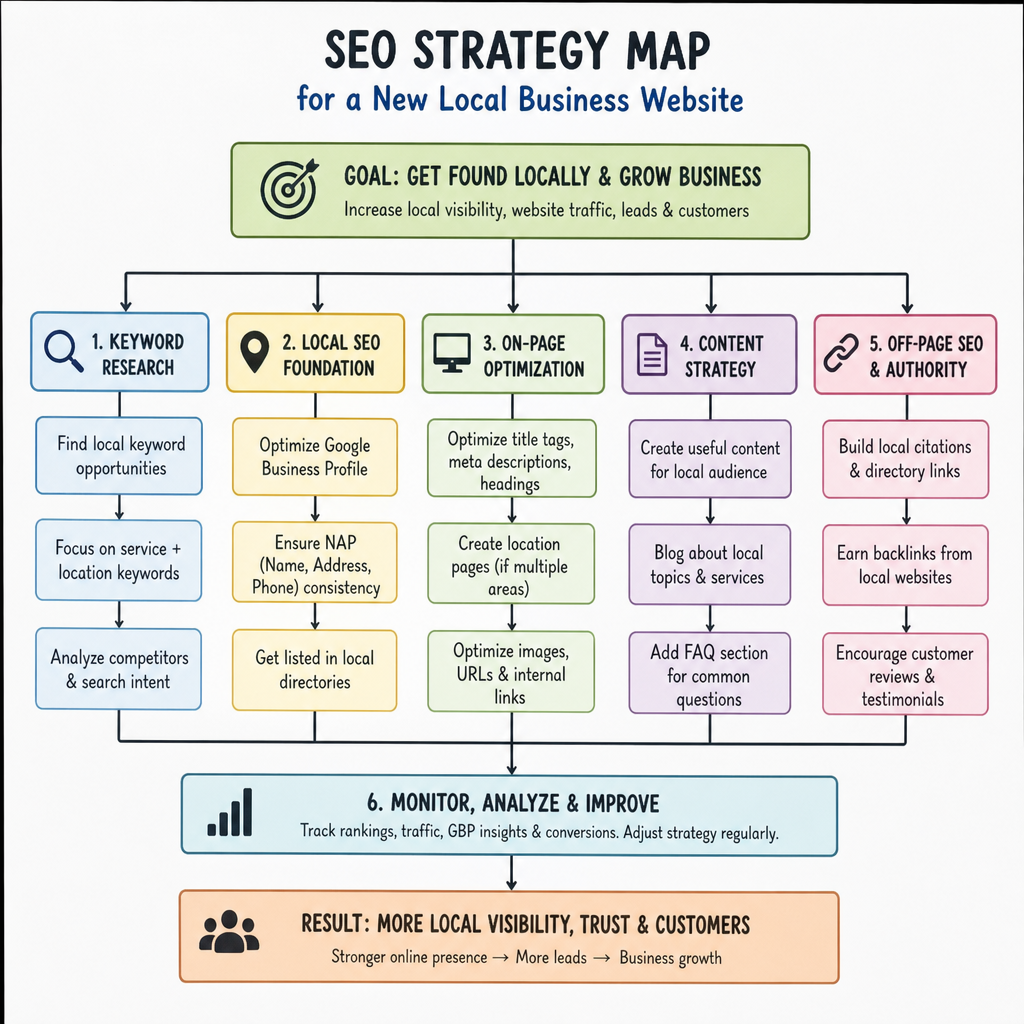
The first 90 days should build a base that can grow. For a new home services site, that means choosing a narrow focus, publishing the most important pages, fixing technical blockers, and starting local trust-building.
A realistic first plan might look like this:
- Days 1–15: Audit site structure, technical setup, tracking, Google Search Console access, local profiles, and existing content.
- Days 16–30: Finalize keyword strategies around core services, service areas, urgent problems, and support topics.
- Days 31–50: Publish or improve the main service pages with stronger on-page SEO, better internal links, clear calls to action, and local details.
- Days 51–70: Create support content around common customer questions, seasonal issues, maintenance advice, and repair-vs-replace decisions.
- Days 71–90: Begin ethical link building, improve pages with early impressions, add accurate structured data where useful, and refine conversion paths.
This plan is not flashy, but it is durable. It helps a new domain become easier to crawl, easier to trust, and easier for customers to use.
The takeaway for new domains
Ranking a new site in 2026 is not about finding one secret trick. It is about stacking the right signals: focused topics, useful pages, clean technical SEO, clear local relevance, strong content optimization, and credible links. AI search makes thin content easier to ignore, but it also gives well-structured, genuinely helpful pages more ways to be found.
For an HVAC company, plumbing company, or wider home services brand, the smartest path is to start specific, answer real customer questions, show practical skill, and build authority one useful page at a time. Whether the work is handled inside the company or with a partner like Profit Pandas, the winning strategy is the same: make the site the clearest answer for the customers you actually want to reach.
Q&A
Question: How long should a new domain expect to wait before seeing real SEO progress?
Short answer: The article does not give a fixed timeline, but it makes clear that new domains usually gain traction in steps. In the first 90 days, the goal is to build a crawlable, useful, locally credible base rather than expect instant wins. Early signs of progress may include more indexed pages, impressions in Google Search Console, visibility for long-tail searches, and better engagement or conversions on service pages.
Question: Should a new home services website publish blog posts before service pages?
Short answer: No. The article recommends starting with the pages closest to revenue, such as service pages, service-area pages, contact pages, and high-intent support content. Blog posts can help, but they should support the buyer journey and strengthen core service topics instead of pulling focus away from them.
Question: Is AI search a reason to use special SEO tricks or new schema types?
Short answer: No. The article explains that AI-driven search still depends on basic SEO work, including crawlability, useful content, clear structure, and the ability to appear in Search with a snippet. It also notes that Google says there is no special schema or machine-readable file required just for AI Overviews or AI Mode.
Question: What makes a local service page more trustworthy to both customers and search engines?
Short answer: A trustworthy local service page is specific, accurate, and useful. It should explain the customer’s problem, the service process, warning signs, cost or timing factors, and next steps. It should also include real local details, clear contact information, real photos when available, authentic reviews, and true statements about licensing, insurance, warranties, or guarantees.
Question: What kind of link building is safest for a new domain?
Short answer: The safest link building is based on relevance and real relationships. The article recommends local partnerships, useful homeowner resources, brand mention outreach, broken link outreach, community work, and digital PR. It warns against buying links, using spammy exchanges, or relying on low-quality guest posts because those tactics may create risk without building real authority.
About the Author
Profit Pandas
Profit Pandas is a data-driven digital marketing agency focused on helping businesses improve online visibility, generate qualified leads, and turn digital marketing into measurable business growth. The agency provides SEO, paid advertising, Google Business Profile optimization, AEO/GEO, website development, conversion optimization, analytics, automation, and other digital marketing services.
With experience across SEO, local search, paid advertising, website performance, and emerging AI-powered search, Profit Pandas develops strategies that connect visibility with real business outcomes. Its approach emphasizes search intent, technical optimization, useful content, local authority, conversion-focused websites, and accurate performance tracking.
The Profit Pandas team regularly publishes practical insights on SEO, home service marketing, Google Ads, Local Services Ads, website performance, and AI search to help business owners make informed digital marketing decisions.